Passkey Authentication Service · View 16 of 21 · Operations
Decisions
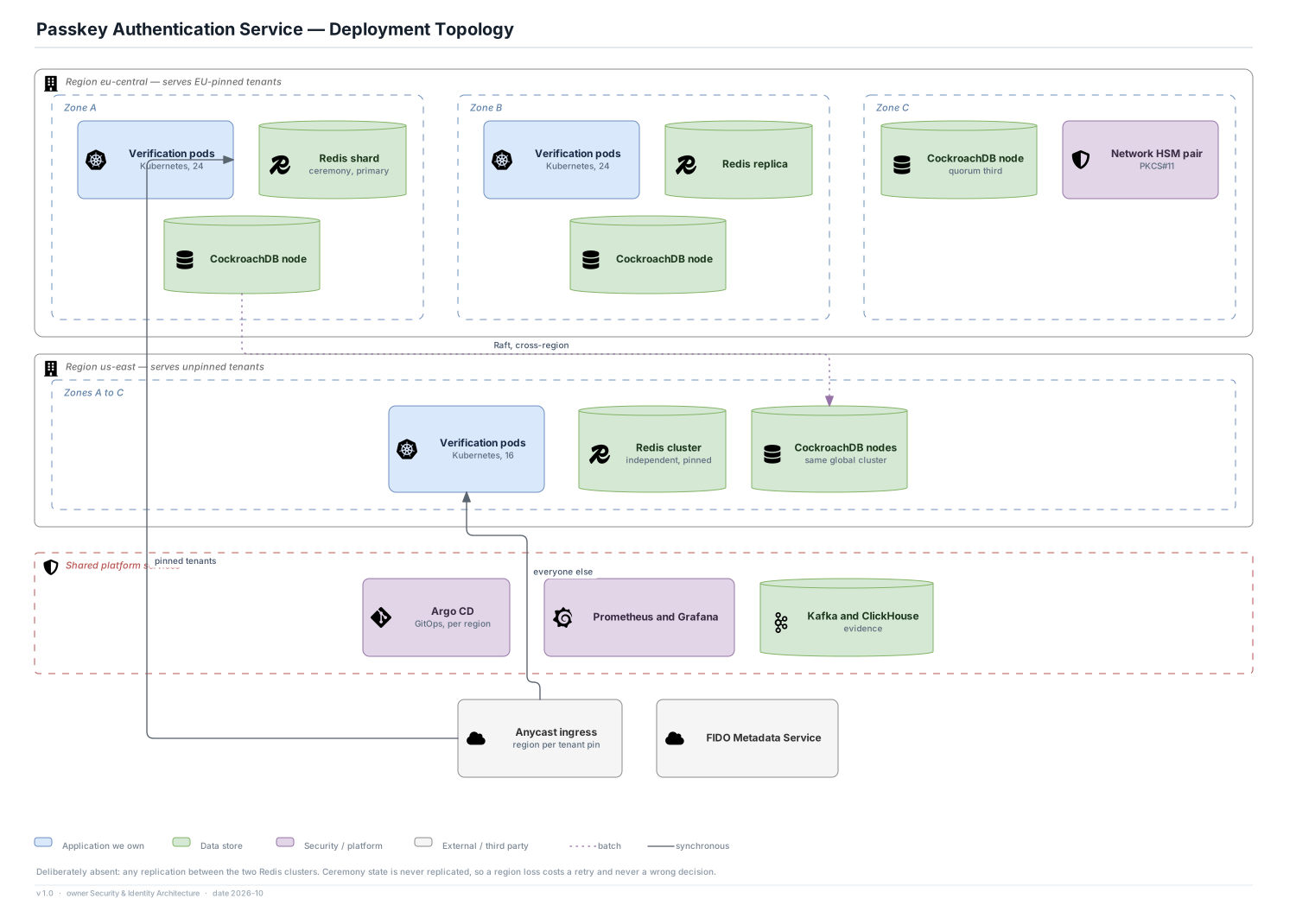
- The credential store is one globally replicated cluster with per-row region pinning, which is how tenant residency is satisfied without running a separate deployment per tenant.
- Each region's ceremony store is independent and never replicated. A region loss costs in-flight users a retry and can never produce a wrong decision in the surviving region.
- Three zones carry the credential quorum; the third zone holds no verification capacity, only the quorum member and the HSM pair.
- Anycast ingress routes by tenant pin first and proximity second, because residency outranks latency.
Assumptions
- 24 verification replicas per zone in the home region, 16 in us-east; RTO 60 seconds for regional failover of the authentication path.
- Global credential convergence p99 2 seconds, with read-your-write guaranteed in the registering region.
- Self-hosted Kubernetes on owned hardware in both regions; no managed control plane.
Risks
- Cross-region quorum latency is on the credential write path, which makes registration slower than authentication. That is accepted because registrations are rare and logins are not.
- An HSM pair per region is a standing cost that does not scale down, and it is the floor under the per-region cost model.