Passkey Authentication Service · View 17 of 21 · Operations
Decisions
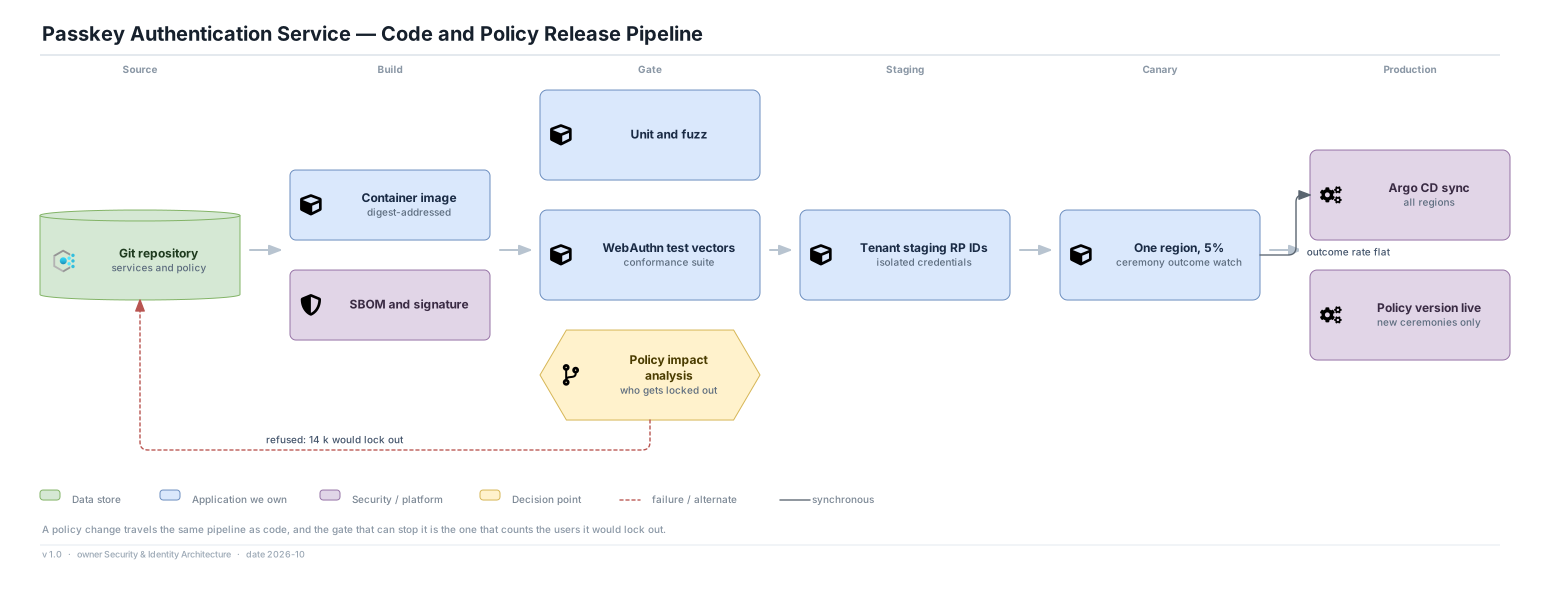
- A tenant policy change travels the same pipeline as code, because both can lock a user out and only one of them currently gets reviewed.
- The impact-analysis gate is a hard refusal, not a warning: a change that would lock out users above a threshold does not reach staging without an attributed override.
- Policy versions apply to new ceremonies only. Nothing in this pipeline can retroactively invalidate a credential; that requires a separate, two-approver revocation.
- The WebAuthn conformance vectors run on every build, because a verification regression is silent — it accepts rather than fails.
Assumptions
- Canary is one region at 5% of ceremonies, watched on ceremony outcome rate rather than on error rate alone.
- Staging tenants have their own RP IDs and credential population; a staging credential cannot authenticate against production.
- Images are digest-addressed and signed, with admission policy refusing anything unsigned.
Risks
- A canary measured only on errors would miss the worst regression this platform can have: a verifier that accepts something it should refuse. Outcome-rate watching catches the shape of it, not the fact of it.