Passkey Authentication Service · View 14 of 21 · Runtime
Decisions
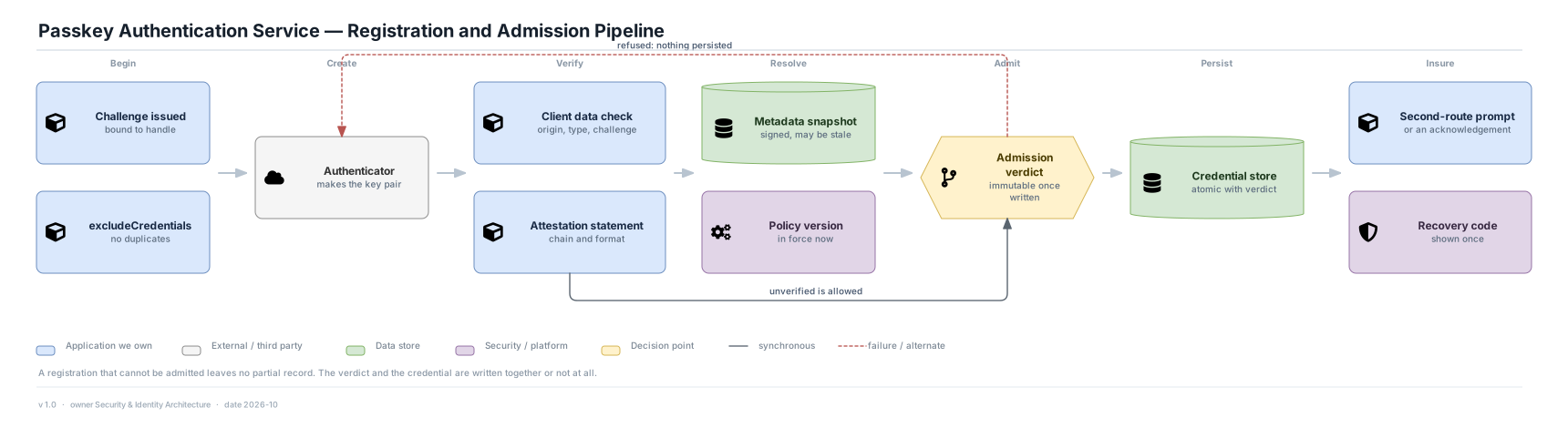
- Authenticator trust is decided once, here, and written down. The authentication path never re-evaluates it, which is what keeps the metadata service off the hot path.
- A registration with no attestation is accepted where tenant policy allows it, and the credential's provenance is marked unverified rather than the registration being refused.
- The snapshot's age is recorded on the verdict, so a credential admitted against a stale metadata copy can be found later without guessing.
- The credential and its verdict are written atomically. A refused registration leaves no partial record to clean up.
Assumptions
- Challenge at least 16 bytes from a CSPRNG, bound to tenant, handle and one ceremony.
- Metadata snapshot refreshed daily; a snapshot up to 7 days stale is still used, with the staleness recorded.
- excludeCredentials is always sent, so duplicate creation is prevented at the authenticator rather than detected afterwards.
Risks
- Fail-static metadata means a model revoked upstream today can still be admitted today. That window is accepted; what closes it is the re-evaluation job in view 19, not a hot-path lookup.