Observability Platform · View 15 of 25 · Runtime
What the sequence proves
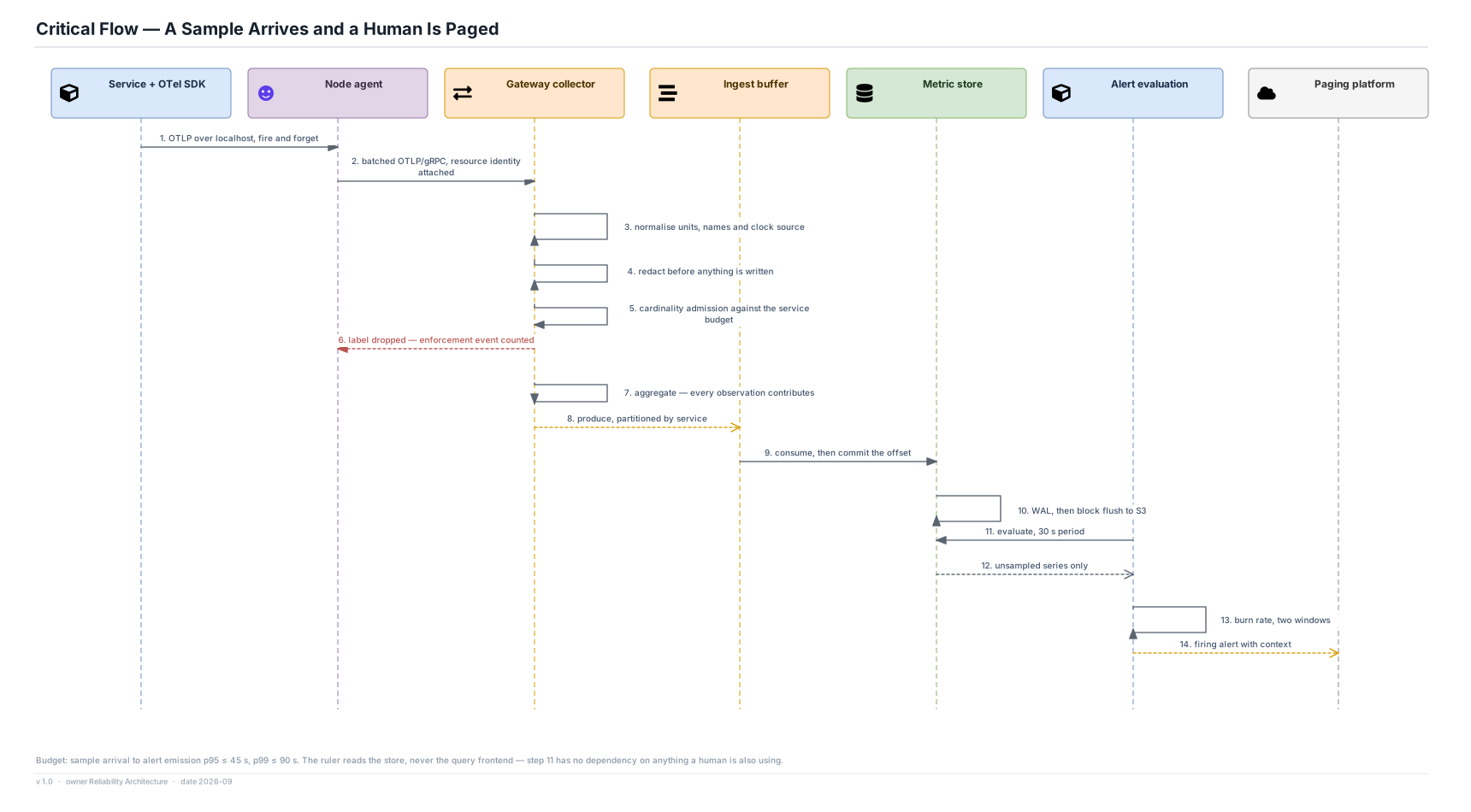
- Step 11 — the ruler reads the metric store, not the query frontend. Nothing a human is also using sits between a sample and a page.
- Step 6 — an admission rejection is a message back to the producer and a counted enforcement event, not a silent drop. The data is gone either way; the difference is whether anyone knows.
- Steps 3 to 7 all happen before the buffer, which is what makes redaction a guarantee rather than a best effort: nothing unredacted is ever written.
Budget
- Sample arrival to alert emission: p95 ≤ 45 s, p99 ≤ 90 s. Metric ingest to queryable: p95 ≤ 20 s, p99 ≤ 45 s.
- Rule evaluation period 30 s. The page budget is therefore mostly evaluation period plus write lag, which is where any improvement has to come from.
Risks
- A consumer-lag incident on the buffer delays every alert in the platform by the lag, and looks to a reader exactly like a quiet estate. This is why freshness is a first-class alerting signal in view 21 rather than a dashboard.