Incident Management Platform · View 25 of 34 · 5 · Runtime
Decisions
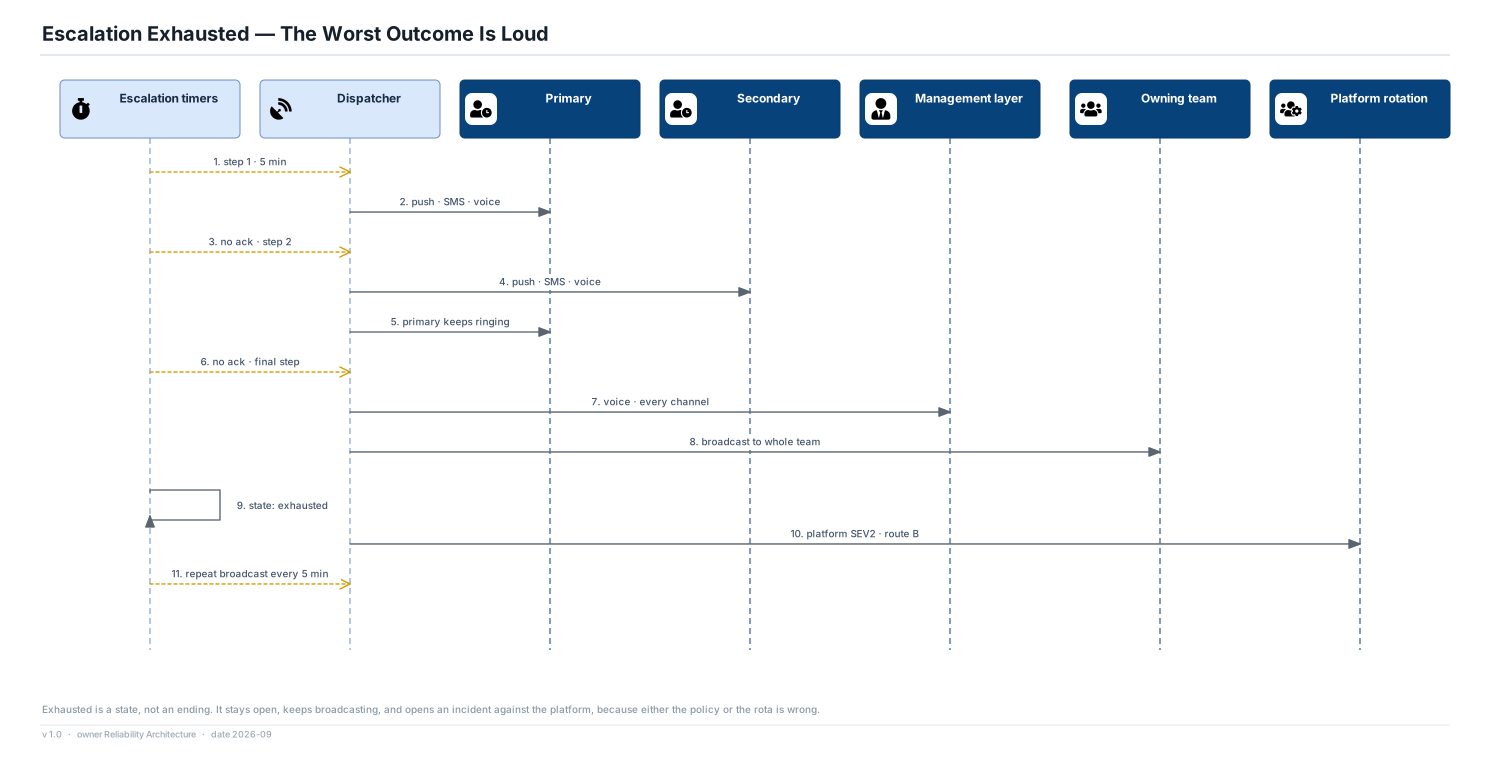
- Every escalation policy must end in a defined final step, and the policy editor refuses to save one that does not. The final step is a management layer plus a broadcast to the whole owning team (ADR-23).
- Earlier targets keep being notified when later steps begin. Escalation adds people; it does not stop calling the primary, who may simply have been in a lift.
- Exhausted is a state that stays open. The broadcast repeats every 5 minutes until someone acknowledges, and a SEV2 is opened against the platform itself, sent on carrier B to the platform rotation.
Why a platform incident
- Exhaustion means the rota, the contact data or the policy is wrong, and all three are the platform's configuration. Treating it as someone else's missed page is how the same exhaustion happens next month.
Target
- Zero silent exhaustions. Every exhaustion reviewed, with the contributing factor recorded against the rotation.