Incident Management Platform · View 24 of 34 · 5 · Runtime
Decisions
- Rotations are defined in local wall-clock time in a named IANA zone, because that is how people agree to be on call. Everything materialised and everything stored is UTC.
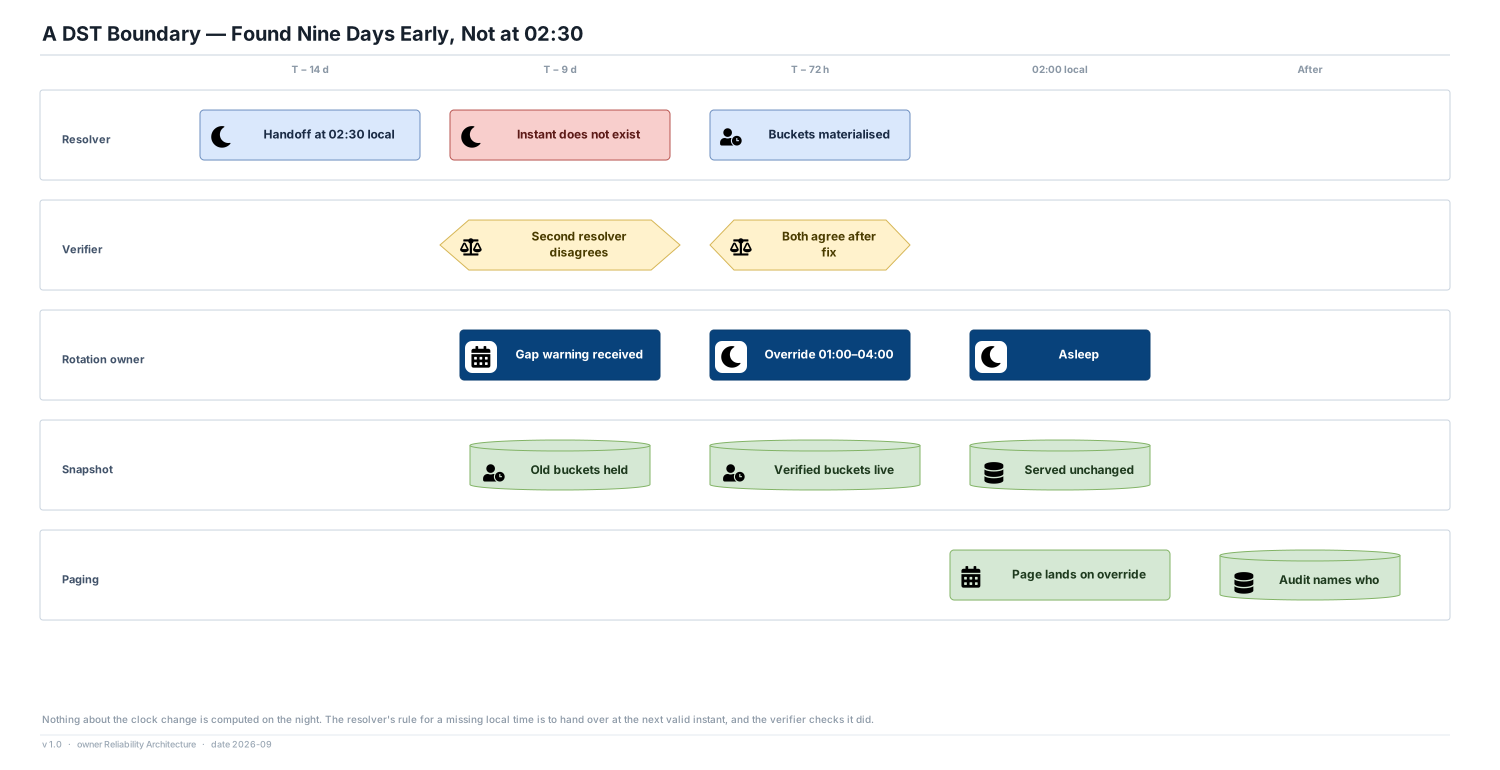
- The rule for a local time that does not exist is to hand over at the next valid instant; for a local time that happens twice, at the first occurrence. Both are written down and both resolvers implement them independently.
- Buckets for the boundary are materialised and verified 72 hours before it. Nothing about the clock change is computed on the night.
Proof
- Every release runs schedule resolution for all 25 rotations across every DST transition in their zones until 2030, against both implementations. A zone rule change upstream is rolled out as a release and re-verified the same way.
What the owner sees
- A warning naming the rotation, the night, the local interval and what each resolver produced, with a one-click override for the gap. Not a stack trace.