Incident Management Platform · View 26 of 34 · 6 · Operations
Decisions
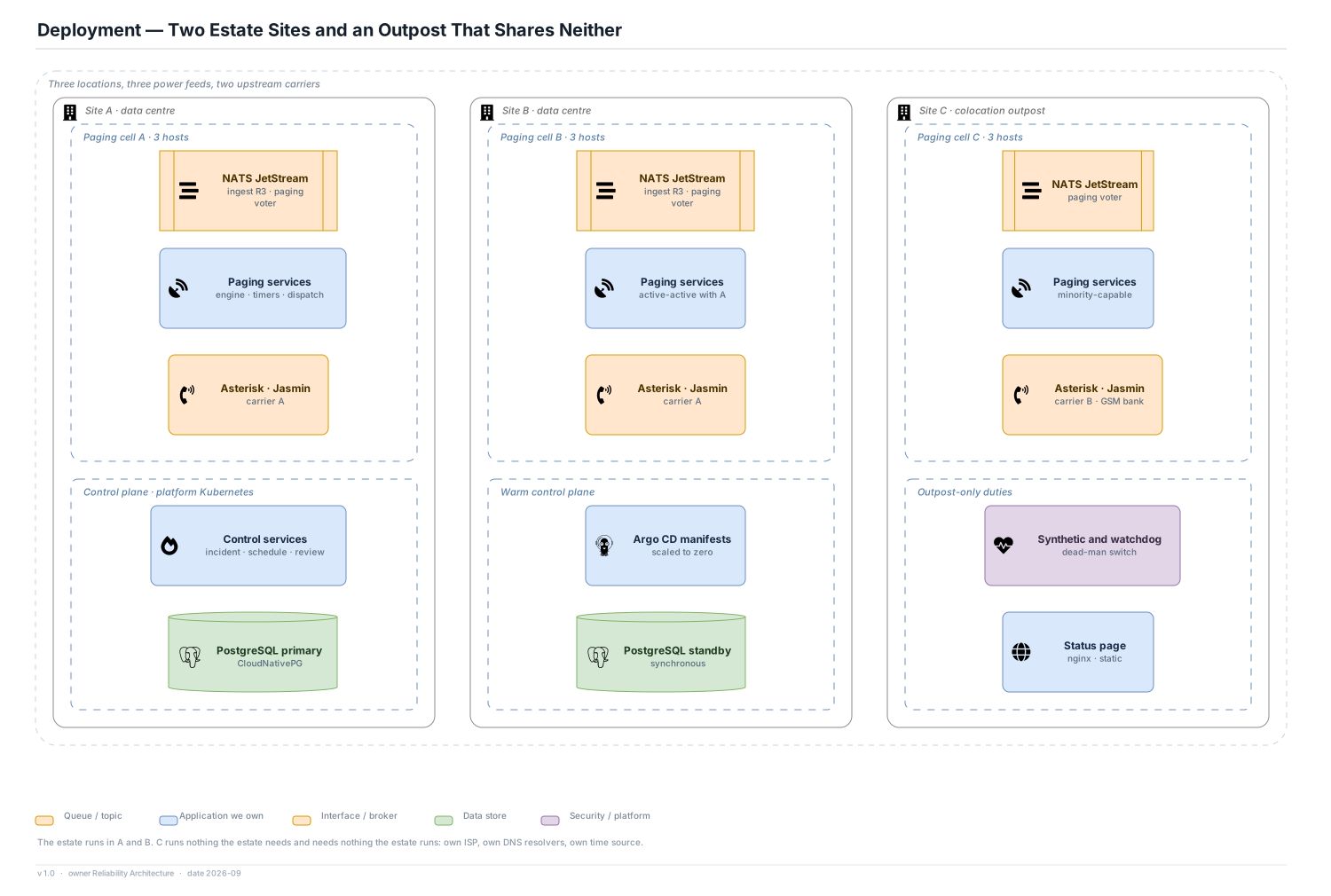
- The requirement's second region becomes site B, and its out-of-cloud provider becomes site C: a colocation outpost on a different power grid and upstream carrier, running the third paging cell, carrier B, the synthetic probes, the dead-man switch and the static status page (ADR-03).
- Site C is not a disaster-recovery copy of A. It is a full voter in the paging domain and a full paging cell on its own, which is what lets it page during the event that takes out both estate sites.
- Each site runs its own DNS resolvers and its own time sources for the cell, and the responder app ships with all three cells' addresses. No shared resolver or NTP server is on the paging path.
Sizing
- Per cell: three hosts with 16 cores, 64 GB and 2 TB NVMe. Control plane: three control-plane nodes and three workers. The load is small; the hosts are sized for the storm and for losing one of three.
Stated premium
- Site C costs about USD 55,000 a year before staff time: colocation space and power, a second ISP, three servers amortised over four years, the carrier B trunk and SMPP account minimums, and a GSM modem bank. A planning estimate, stated so it can be argued with (ADR-32).