Edge Cache and CDN Platform · View 23 of 29 · 6 · Operations
Decisions
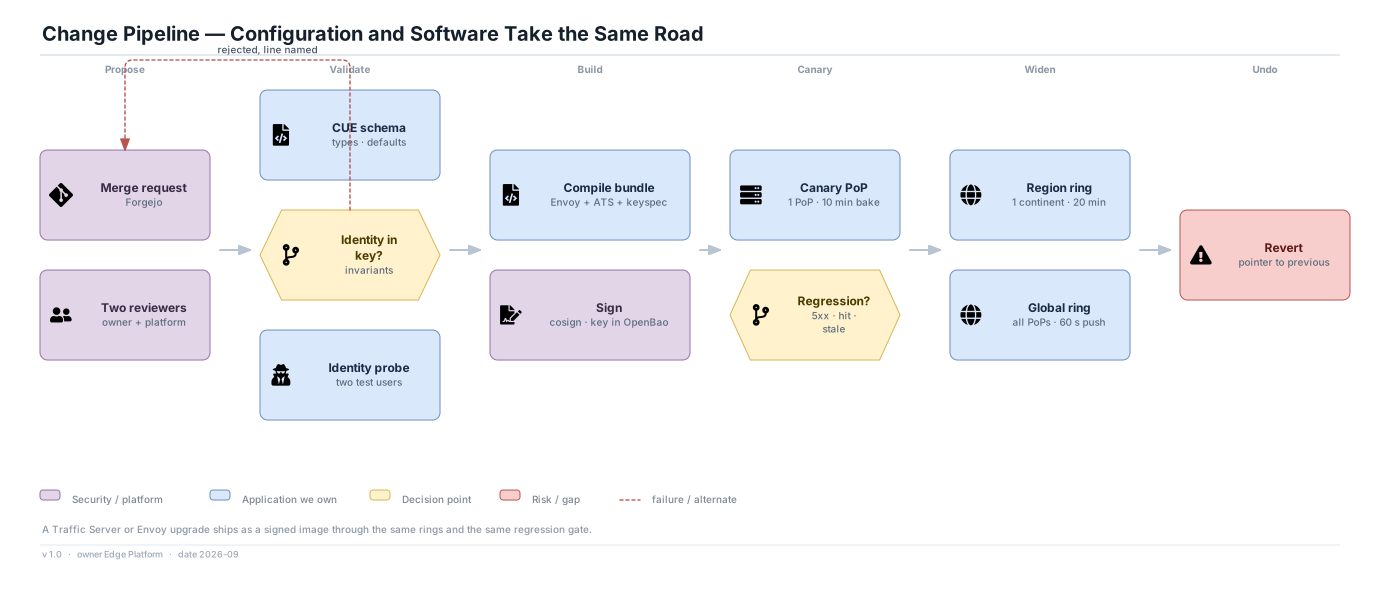
- Validation has three layers: CUE for types and defaults, invariants such as 'a rule marked identity-varying must name the identity in its key', and a differential probe that fetches declared test URLs as two test users and compares the bodies.
- Bundles are compiled once, signed with a key held in OpenBao, and addressed by hash. A PoP applies a bundle only if the signature checks against the platform's public key, so a compromised object store cannot push configuration.
- Software upgrades go through the same rings and the same regression gate. A new Traffic Server version is a new image hash, not a special process.
Numbers
- Standard change: 10-minute canary bake, 20-minute region bake, then global. An emergency revert skips the bakes.
Risks
- The identity probe only covers URLs the owner declares as test URLs. A property with poor test URLs gets weaker protection. The per-path Vary-mismatch alert in production is the second line.