Edge Cache and CDN Platform · View 14 of 29 · 4 · Data
Decisions
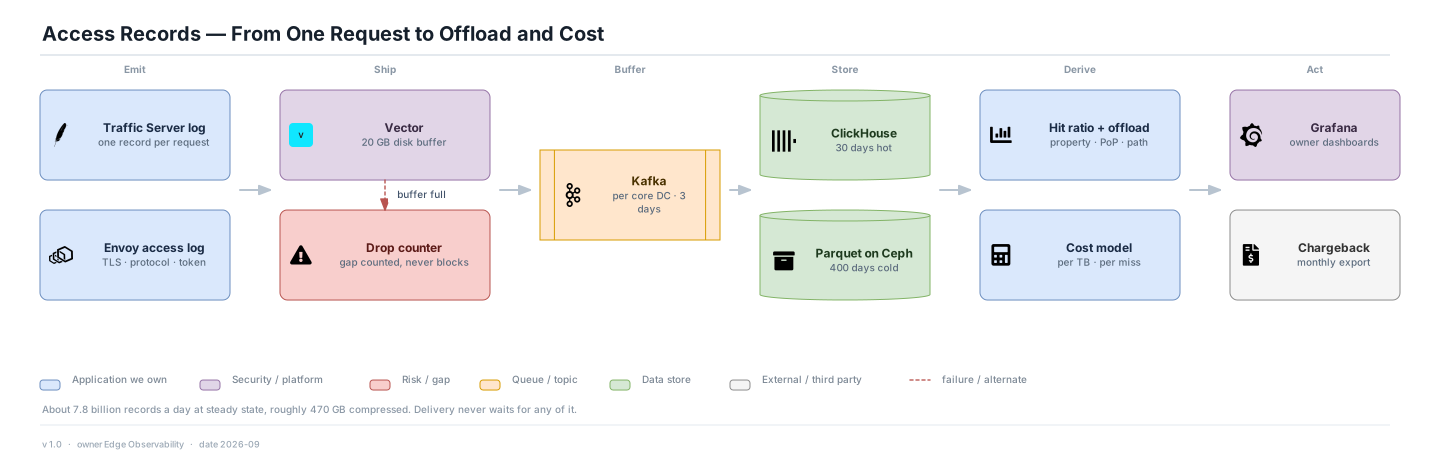
- Vector writes to a bounded disk buffer and drops when it is full. A logging outage never slows delivery, and the size of the gap is itself a metric.
- Kafka sits between the PoPs and ClickHouse so that an analytics outage or schema change is replayed from three days of buffer, not lost.
- Each record carries the configuration version that served it. A regression can be tied to a commit without guessing from timestamps.
What a record holds
- Property, rule, key hash, cache status, object size, bytes served, upstream tier, TTFB, total time, PoP, client country and ASN, protocol, and config version. The key hash, never the key, so a URL with personal data in it is not copied into analytics.
Numbers
- About 7.8 billion records a day at 90,000 requests per second steady state, about 470 GB a day compressed. 30 days hot is about 28 TB with two replicas; 400 days cold is about 190 TB of Parquet.