Edge Cache and CDN Platform · View 13 of 29 · 4 · Data
The contract
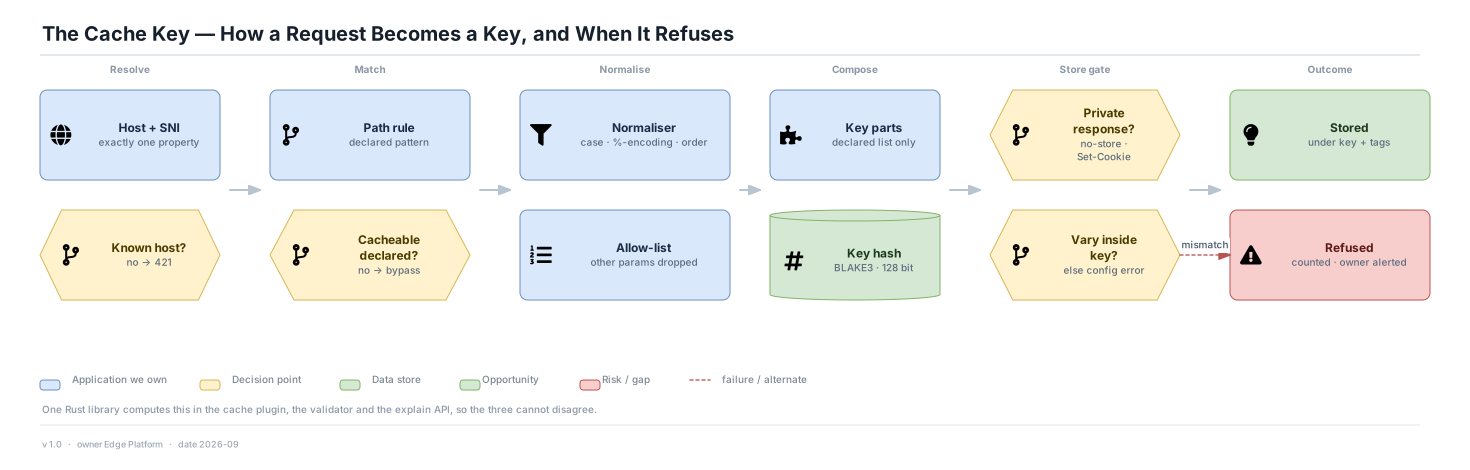
- A key is scheme, host, normalised path, the declared query parameters in sorted order, the declared request headers, and optionally a device or geography class. Nothing else enters it, ever.
- Normalisation happens once, deterministically: host lowercased, percent-encoding normalised, parameters sorted, anything outside the allow-list removed.
- A response that is private, no-store, sets a session cookie or carries credentials is not stored, whatever the rule says. The refusal is counted per path and shown to the owner.
Vary
- If the origin sends Vary naming a header the key does not include, the object is not stored and the owner is alerted. Honouring it silently would fragment the cache, and ignoring it would leak. Neither is the platform's decision to make.
- Accept-Encoding is the one normalised exception: the edge stores br, gzip and identity as three declared variants rather than re-encoding per request.
Risks
- Declared keys give a lower hit ratio than permissive ones, and the gap shows in cost per terabyte. It is accepted: a hit ratio can be tuned later, a disclosure cannot be undone.