Edge Cache and CDN Platform  ·  View 04 of 29  ·  2 · People and journeys

Journey — Onboarding a Property

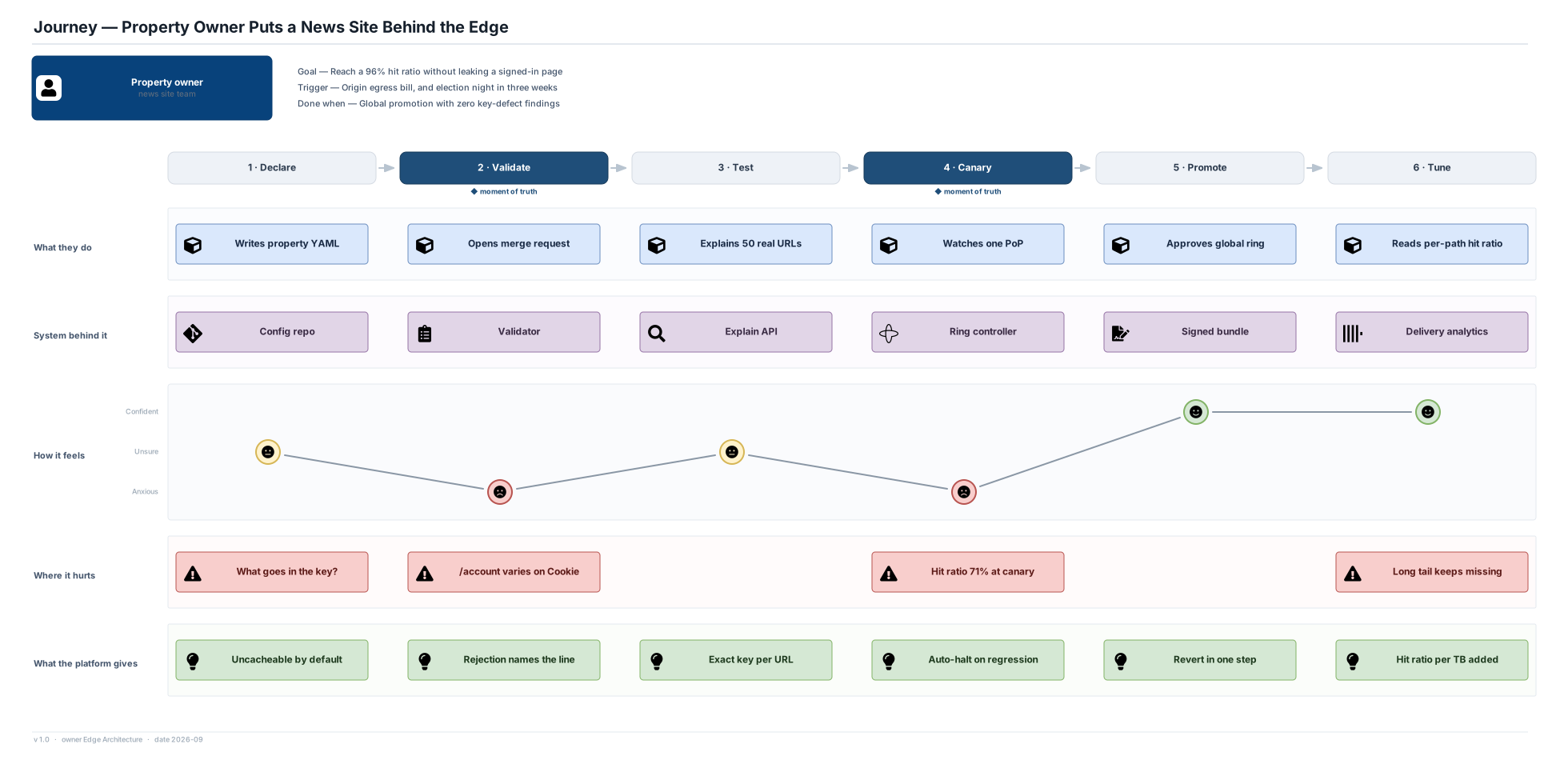
A property owner declares keys for a news site and ships it. The low points are the rejection they did not expect and the canary number they did not want.

Editable source SVG draw.io All views
Property owner news site team Goal — Reach a 96% hit ratio without leaking a signed-in page Trigger — Origin egress bill, and election night in three weeks Done when — Global promotion with zero key-defect findings 1 · Declare 2 · Validate ◆ moment of truth 3 · Test 4 · Canary ◆ moment of truth 5 · Promote 6 · Tune What they do Writes property YAML Opens merge request Explains 50 real URLs Watches one PoP Approves global ring Reads per-path hit ratio System behind it Config repo Validator Explain API Ring controller Signed bundle Delivery analytics How it feels Confident Unsure Anxious Where it hurts What goes in the key? /account varies on Cookie Hit ratio 71% at canary Long tail keeps missing What the platform gives Uncacheable by default Rejection names the line Exact key per URL Auto-halt on regression Revert in one step Hit ratio per TB added Journey — Property Owner Puts a News Site Behind the Edge v 1.0 · owner Edge Architecture · date 2026-09

The trough, and the answer

  • Validation rejects /account because its responses differ between two test users, and the declared key has no identity in it. The owner is annoyed for an afternoon. Without the check, the platform would have served one reader's account page to another, with no error anywhere.
  • Canary hit ratio of 71% against a 96% target is usually an allow-list gap: a marketing parameter such as utm_source left in the key. The per-path hit ratio names the pattern, and explain shows the parameter.

Decisions it forces

  • Nothing is cacheable until the owner says so. The first merge request caches the static assets only, which already takes most of the bytes.
  • The explain tool runs the production key library, not a copy of its logic (ADR-02).
  • Ring rollout halts itself on a hit-ratio regression, not only on errors, because a bad key usually shows up as a lower hit ratio before it shows up as an error.

Numbers

  • Median onboarding target of two working days from first merge request to global, most of it the owner's own testing.
  • Canary bake of 10 minutes on one PoP, then 20 minutes on one continent.