Edge Cache and CDN Platform  ·  View 03 of 29  ·  2 · People and journeys

Actors and Their Core Journeys

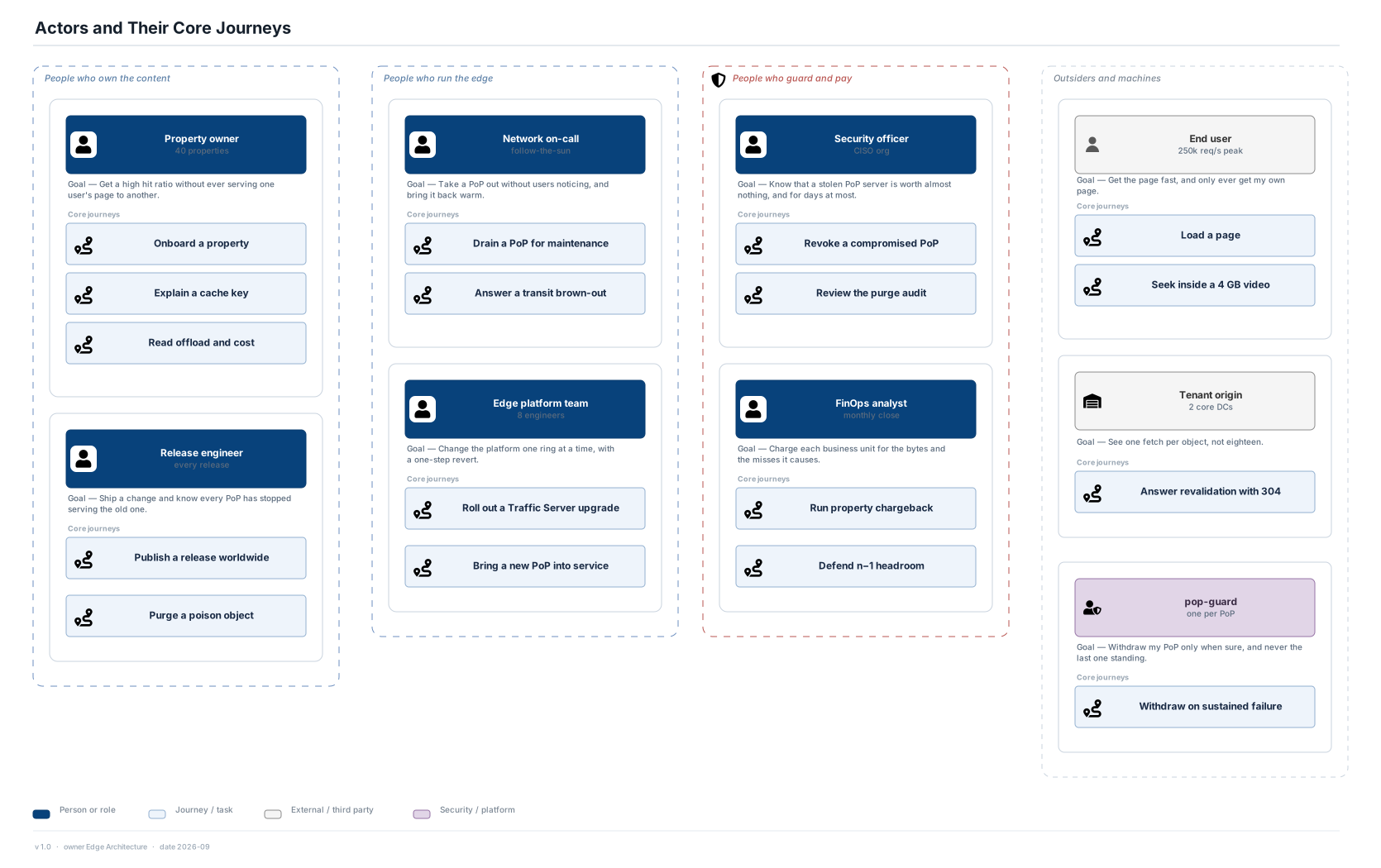
Nine actors in four groups, each with the one thing they need from the edge, and the journeys that need the most care.

Editable source SVG draw.io All views
People who own the content Property owner 40 properties Goal — Get a high hit ratio without ever serving one user's page to another. Core journeys Onboard a property Explain a cache key Read offload and cost Release engineer every release Goal — Ship a change and know every PoP has stopped serving the old one. Core journeys Publish a release worldwide Purge a poison object People who run the edge Network on-call follow-the-sun Goal — Take a PoP out without users noticing, and bring it back warm. Core journeys Drain a PoP for maintenance Answer a transit brown-out Edge platform team 8 engineers Goal — Change the platform one ring at a time, with a one-step revert. Core journeys Roll out a Traffic Server upgrade Bring a new PoP into service People who guard and pay Security officer CISO org Goal — Know that a stolen PoP server is worth almost nothing, and for days at most. Core journeys Revoke a compromised PoP Review the purge audit FinOps analyst monthly close Goal — Charge each business unit for the bytes and the misses it causes. Core journeys Run property chargeback Defend n−1 headroom Outsiders and machines End user 250k req/s peak Goal — Get the page fast, and only ever get my own page. Core journeys Load a page Seek inside a 4 GB video Tenant origin 2 core DCs Goal — See one fetch per object, not eighteen. Core journeys Answer revalidation with 304 pop-guard one per PoP Goal — Withdraw my PoP only when sure, and never the last one standing. Core journeys Withdraw on sustained failure Actors and Their Core Journeys Person or role Journey / task External / third party Security / platform v 1.0 · owner Edge Architecture · date 2026-09

Why these actors

  • The property owner is the most important actor after the end user, because the owner declares the key. Most of the platform's safety features exist to make that declaration hard to get wrong.
  • The origin is an actor with a goal. Its goal, one fetch per object and not eighteen, is the shield tier's entire reason to exist.
  • pop-guard is a machine with the most dangerous permission on the platform: removing a PoP from the internet. It gets a card so it gets an owner and a failure mode.

The journeys mapped next

  • Onboarding a property (view 04): the moment where a wrong key is cheapest to catch.
  • Publishing a release (view 05): the moment where 'purged' has to mean every PoP.
  • Draining a PoP (view 06): the moment where an operator can cause the outage the platform exists to prevent.

Deliberately not mapped

  • The end user's journey. It has one phase that matters, the first byte, and every structural view in the set is about that phase.