Data Quality Service  ·  View 03 of 20  ·  People and journeys

Actors and Journeys

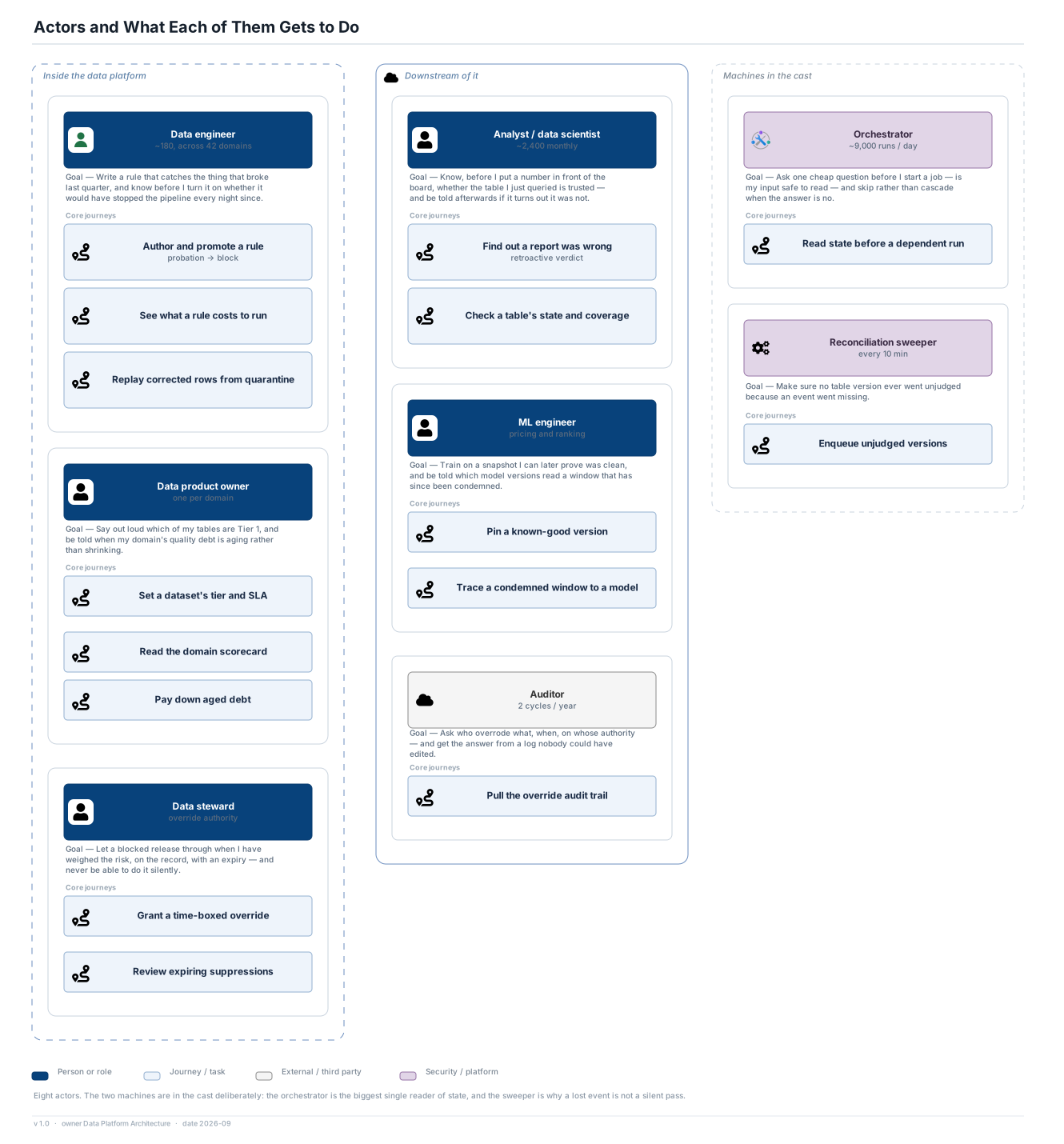
Eight actors, their goals in their own words, and what each of them gets to do.

Editable source SVG draw.io All views
Inside the data platform Data engineer ~180, across 42 domains Goal — Write a rule that catches the thing that broke last quarter, and know before I turn it on whether it would have stopped the pipeline every night since. Core journeys Author and promote a rule probation → block See what a rule costs to run Replay corrected rows from quarantine Data product owner one per domain Goal — Say out loud which of my tables are Tier 1, and be told when my domain's quality debt is aging rather than shrinking. Core journeys Set a dataset's tier and SLA Read the domain scorecard Pay down aged debt Data steward override authority Goal — Let a blocked release through when I have weighed the risk, on the record, with an expiry — and never be able to do it silently. Core journeys Grant a time-boxed override Review expiring suppressions Downstream of it Analyst / data scientist ~2,400 monthly Goal — Know, before I put a number in front of the board, whether the table I just queried is trusted — and be told afterwards if it turns out it was not. Core journeys Find out a report was wrong retroactive verdict Check a table's state and coverage ML engineer pricing and ranking Goal — Train on a snapshot I can later prove was clean, and be told which model versions read a window that has since been condemned. Core journeys Pin a known-good version Trace a condemned window to a model Auditor 2 cycles / year Goal — Ask who overrode what, when, on whose authority — and get the answer from a log nobody could have edited. Core journeys Pull the override audit trail Machines in the cast Orchestrator ~9,000 runs / day Goal — Ask one cheap question before I start a job — is my input safe to read — and skip rather than cascade when the answer is no. Core journeys Read state before a dependent run Reconciliation sweeper every 10 min Goal — Make sure no table version ever went unjudged because an event went missing. Core journeys Enqueue unjudged versions Actors and What Each of Them Gets to Do Person or role Journey / task External / third party Security / platform Eight actors. The two machines are in the cast deliberately: the orchestrator is the biggest single reader of state, and the sweeper is why a lost event is not a silent pass. v 1.0 · owner Data Platform Architecture · date 2026-09

What this view settles

  • Authoring, owning and overriding are three different people. The engineer writes the rule, the product owner sets the tier, the steward grants the override — and no one of them can do all three (ADR-13).
  • Two machines are in the cast on purpose. The orchestrator's pre-run gate check is the highest-volume interaction in the system, and the sweeper is the reason a lost event is not a pass.
  • The auditor's goal — 'get the answer from a log nobody could have edited' — is why the override audit log is Object-Locked rather than merely append-only (ADR-14).

Assumptions

  • One data product owner per domain, 42 domains. Stewardship is a named delegation, not a job title.
  • Auditors read twice a year, over a 25-month verdict window and a 7-year override log.

Risks

  • The steward role is the soft spot: if override authority is granted widely to keep pipelines moving, every other control in this set becomes advisory.
  • Nobody in this cast owns 'datasets with no assertions'. That gap is why coverage is rendered as a distinct state rather than left implicit (ADR-05).