Data Quality Service  ·  View 04 of 20  ·  People and journeys

Journey — The Report That Was Wrong for Three Weeks

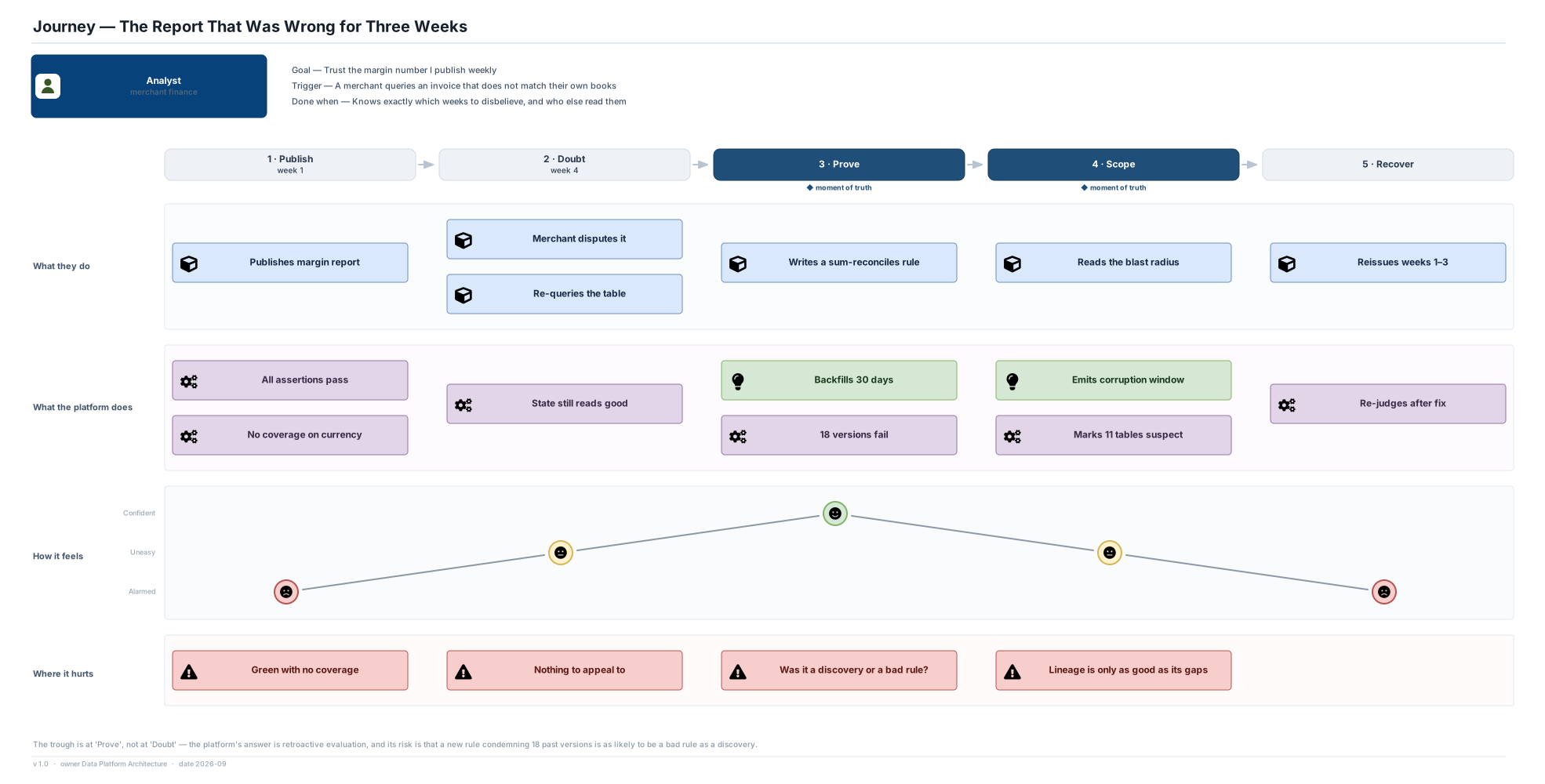
An analyst publishes a margin number, a merchant disputes it four weeks later, and the platform has to say which weeks to disbelieve.

Editable source SVG draw.io All views
Analyst merchant finance Goal — Trust the margin number I publish weekly Trigger — A merchant queries an invoice that does not match their own books Done when — Knows exactly which weeks to disbelieve, and who else read them 1 · Publish week 1 2 · Doubt week 4 3 · Prove ◆ moment of truth 4 · Scope ◆ moment of truth 5 · Recover What they do Publishes margin report Merchant disputes it Re-queries the table Writes a sum-reconciles rule Reads the blast radius Reissues weeks 1–3 What the platform does All assertions pass No coverage on currency State still reads good Backfills 30 days 18 versions fail Emits corruption window Marks 11 tables suspect Re-judges after fix How it feels Confident Uneasy Alarmed Where it hurts Green with no coverage Nothing to appeal to Was it a discovery or a bad rule? Lineage is only as good as its gaps Journey — The Report That Was Wrong for Three Weeks The trough is at 'Prove', not at 'Doubt' — the platform's answer is retroactive evaluation, and its risk is that a new rule condemning 18 past versions is as likely to be a bad rule as a discovery. v 1.0 · owner Data Platform Architecture · date 2026-09

The trough, and the answer to it

  • The low point is 'Prove', not 'Doubt'. The platform's answer is retroactive evaluation: a rule written in week 4 is evaluated against week 1's table version and produces a verdict as authoritative as a live one (ADR-01, ADR-10).
  • The deliverable is the corruption window and its blast-radius list — which downstream datasets, reports and feature snapshots read the affected versions — not the alert (ADR-11).
  • Suspect marks are never cleared by the next successful run, because a passing run says nothing about the window that failed.

What this journey exposes

  • Phase 1 shows the real defect: the table was green because nothing was watching that column. 'Passing with no coverage' and 'passing' must not render the same (ADR-05).
  • Phase 3 is the honest risk: a new rule that condemns 18 of the last 30 versions is as likely to be a bad rule as a discovery, and only a person can tell the difference (ADR-10).

Assumptions

  • 30-day automatic lookback for Tier 1 and 2 assertions; MTTD target ≤ 24 h p90 for this class of defect once coverage exists.
  • One-hop lineage propagation in the MVP; 11 downstream tables is the observed median fan-out for a payments-domain fact table. Stated assumption.