Data Quality Service · View 02 of 20 · Context and scope
Why this shape
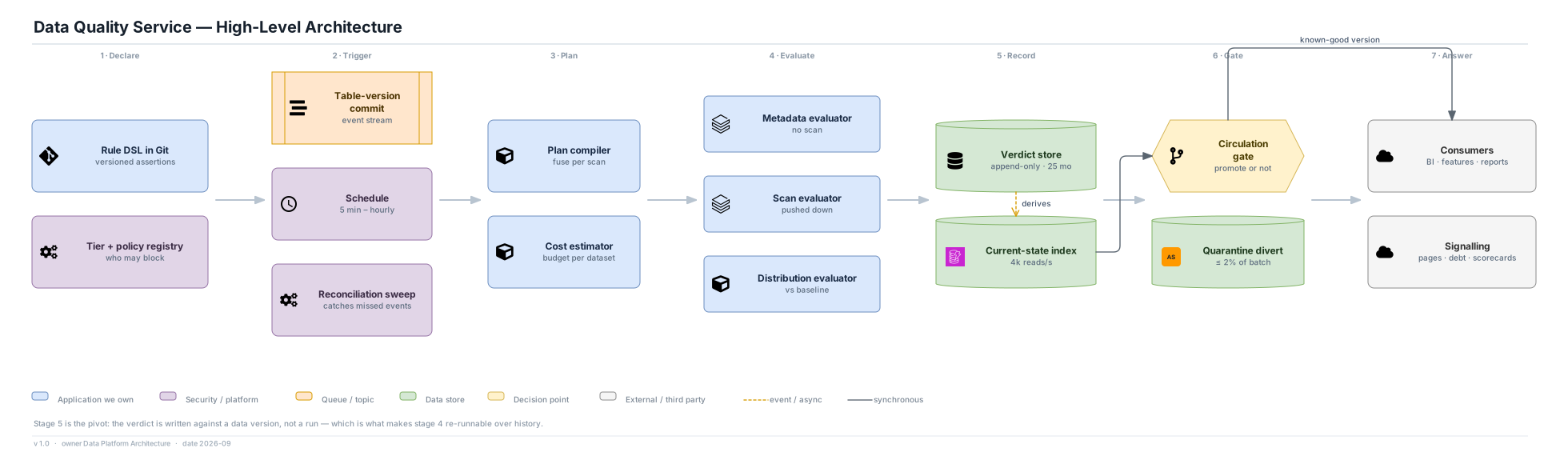
- Stage 5 is the pivot of the whole design: a verdict is recorded against a data version, which is what makes stage 4 re-runnable over history rather than only over today (ADR-01).
- Three triggers, not one. The commit event stream is an optimisation; the schedule and the reconciliation sweep are what make a missed event a delay rather than a silent pass (ADR-09).
- The plan stage exists so that cost is bounded before execution rather than discovered during it — an assertion that will not compile to a bounded plan is refused at authoring time (ADR-06).
Numbers
- 180,000 assertion evaluations/day steady state; 9,000/hour peak in the nightly window; 4× burst for 90 minutes on a large backfill.
- Verdict published within 90 s p95 of a Tier 1 commit; state read ≤ 20 ms p99.
- All stated assumptions from the requirement, chosen to be argued with.
Risks
- Stage 6 is where this architecture is most easily undermined: if the gate is advisory, it will be skipped during an incident, which is exactly when it matters (Question 1, ADR-03).
- Stage 4 runs in the compute the pipelines also need. Quality work competes for capacity precisely when things are going wrong (ADR-07).