Data Quality Service · View 01 of 20 · Context and scope
Decisions
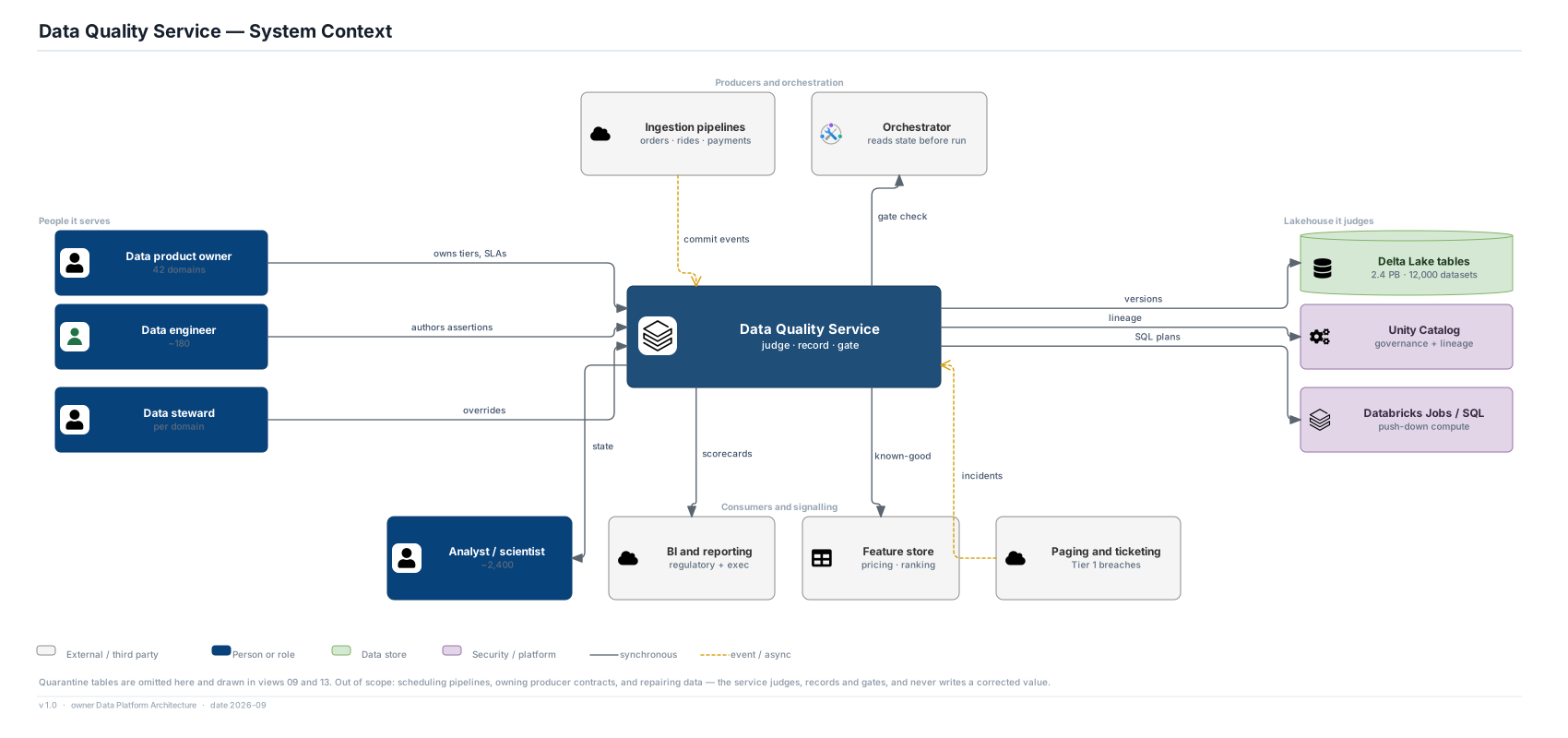
- The judged estate is read-only to this service. Nothing here writes a corrected value into a dataset; repair happens upstream through the normal ingestion path and is then re-judged (ADR-02).
- Unity Catalog is the governance spine, not a second source of truth: grants, lineage and table versions are read from it rather than mirrored.
- The orchestrator is drawn as an actor because it is the largest single reader of state — roughly 9,000 pre-run gate checks a day against ~2,400 human sessions a month.
Assumptions
- 12,000 registered datasets across 42 domains, 2.4 PB, ~40 TB/day ingest. Stated assumption, sized on a mid-size consumer super-app.
- ~180 data engineers author rules; ~2,400 analysts and scientists read state monthly.
- Paging and ticketing already exist as platform services and are integrated, not built.
Out of scope
- Scheduling or running the pipelines that produce the data.
- Owning the data contract negotiation with producers — the service imports contracts, it does not arbitrate them.
- Master data management and record-level reconciliation between systems of record.
- Quarantine tables are omitted from this view to keep the edges readable; they appear in views 09 and 13.