AI Executive Office — CXO Assistant Platform · View 19 of 30 · 5 · Runtime
Why this is the product
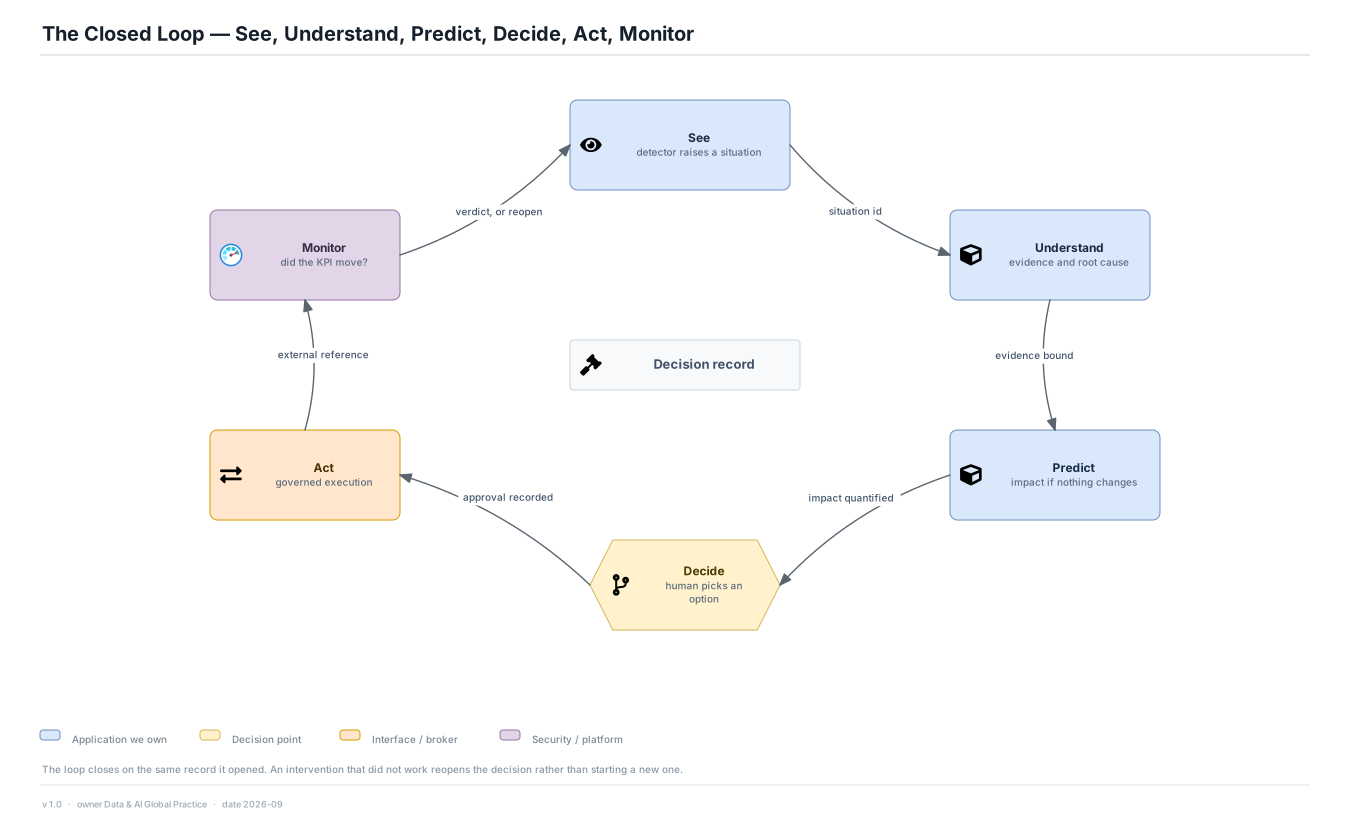
- The requirement asks for a decision intelligence platform rather than a chatbot. This loop is the difference, and the decision record in the centre is what makes it a loop rather than six features
- Monitor closes onto the same record it opened. An intervention that did not work reopens the decision, with what changed, rather than starting an unrelated conversation
- Every arc writes to the record: situation id, evidence, quantified impact, approval, external reference, verdict
What is deliberately not automated
- Decide is a human step, always, for any action above a tenant-configured threshold. Low-risk classes may be automated later, but the loop is drawn with the human in it because that is the default the architecture enforces
- The platform recommends; it does not decide. Where the recommendation is rejected, the rejection is evidence too
Risks
- Closing the loop requires the KPI to actually move within a measurable window. For slow-moving public-sector outcomes the verdict may be inconclusive, and "inconclusive" must be a permitted verdict rather than a failure