Container Registry and Software Supply Chain Platform · View 27 of 33 · 5 · Operations
How the loop closes
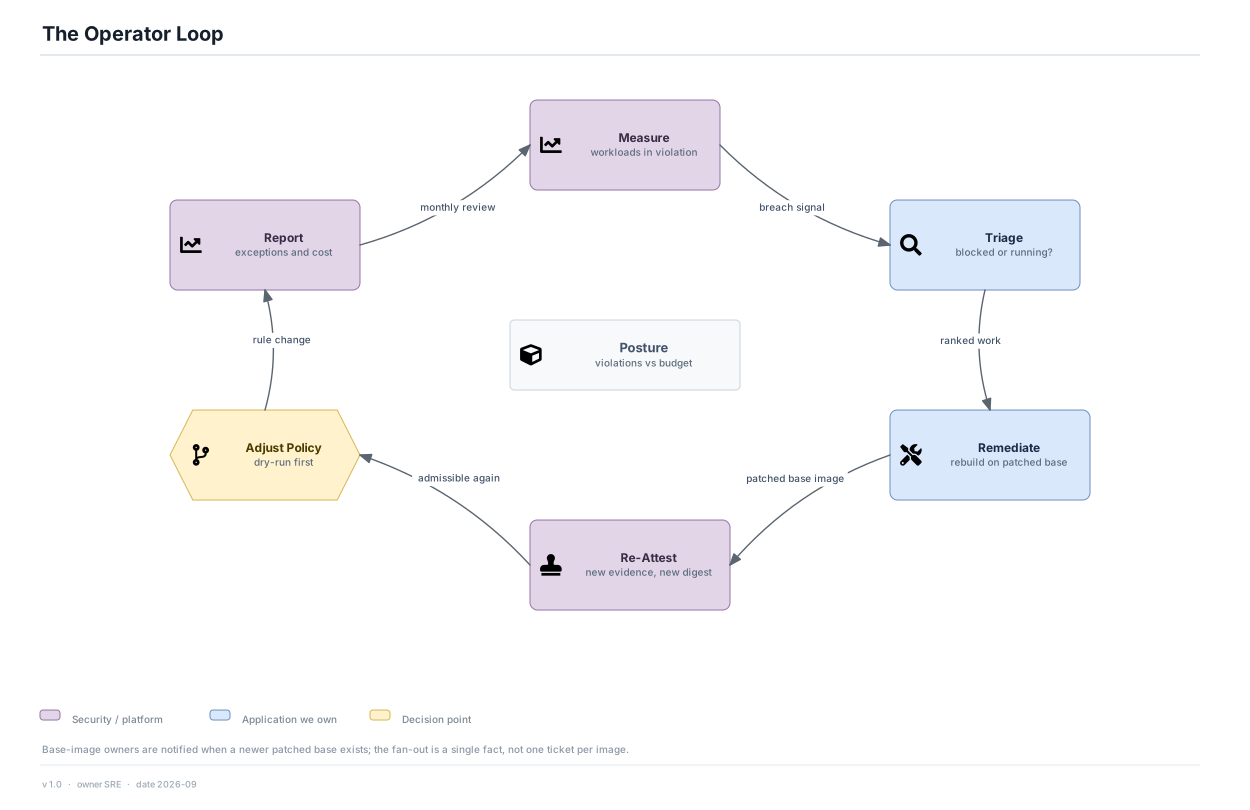
- Measure violations, triage into blocked-at-admission and already-running, remediate by rebuilding on a patched base
- Re-attestation produces a new digest — remediation is never a mutation of the old artifact
- Policy changes go through dry-run before they change what the loop measures
Answering question 7
- Base-image lineage is modelled as composition, not as a flat SBOM per image
- One patched base becomes a single fact that fans out to every derived image, which is what makes this loop tractable
- The cost is that layer identity must be stable and the composition must itself be attested — and that base-image ownership must be a real role, not a rota
Risk
- The loop depends on an owner existing for every repository; unowned repositories accumulate violations that nobody triages
- Cost attribution per team, phase 3, is what makes ownership stick