Container Registry and Software Supply Chain Platform · View 20 of 33 · 4 · Runtime
Decisions
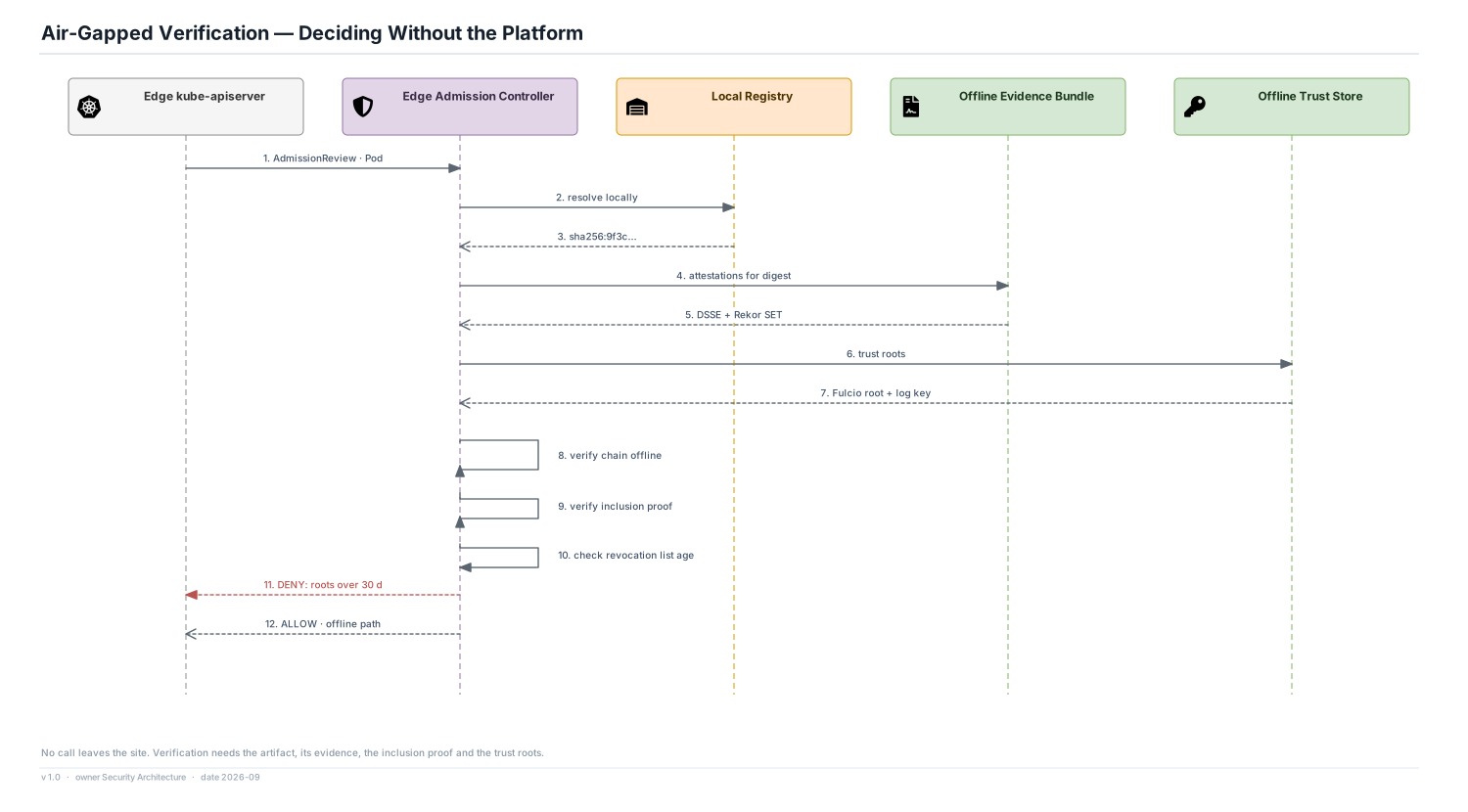
- Verification is offline-capable by design: the artifact, its signature, the inclusion proof and the trust roots are sufficient
- The Rekor signed entry timestamp is verified against a cached log key, so the transparency log need not be reachable
- Trust roots are valid for 30 days offline; past that the site denies rather than trusting stale roots
Why this constrains question 3
- Keyless certificates make offline verification harder, not impossible — the chain still verifies against a cached Fulcio root
- The air-gapped release path uses a long-lived HSM key precisely because certificate freshness cannot be checked there
- Superseded trust roots stay verifiable for the 7-year attestation retention period
Risks
- Revocation propagation to an air-gapped site is bounded by the transport interval, not by the 5-minute target
- The revocation list age is checked and denied on, which converts a silent trust failure into a visible one