Certificate Lifecycle Service · View 12 of 21 · Runtime
The flow
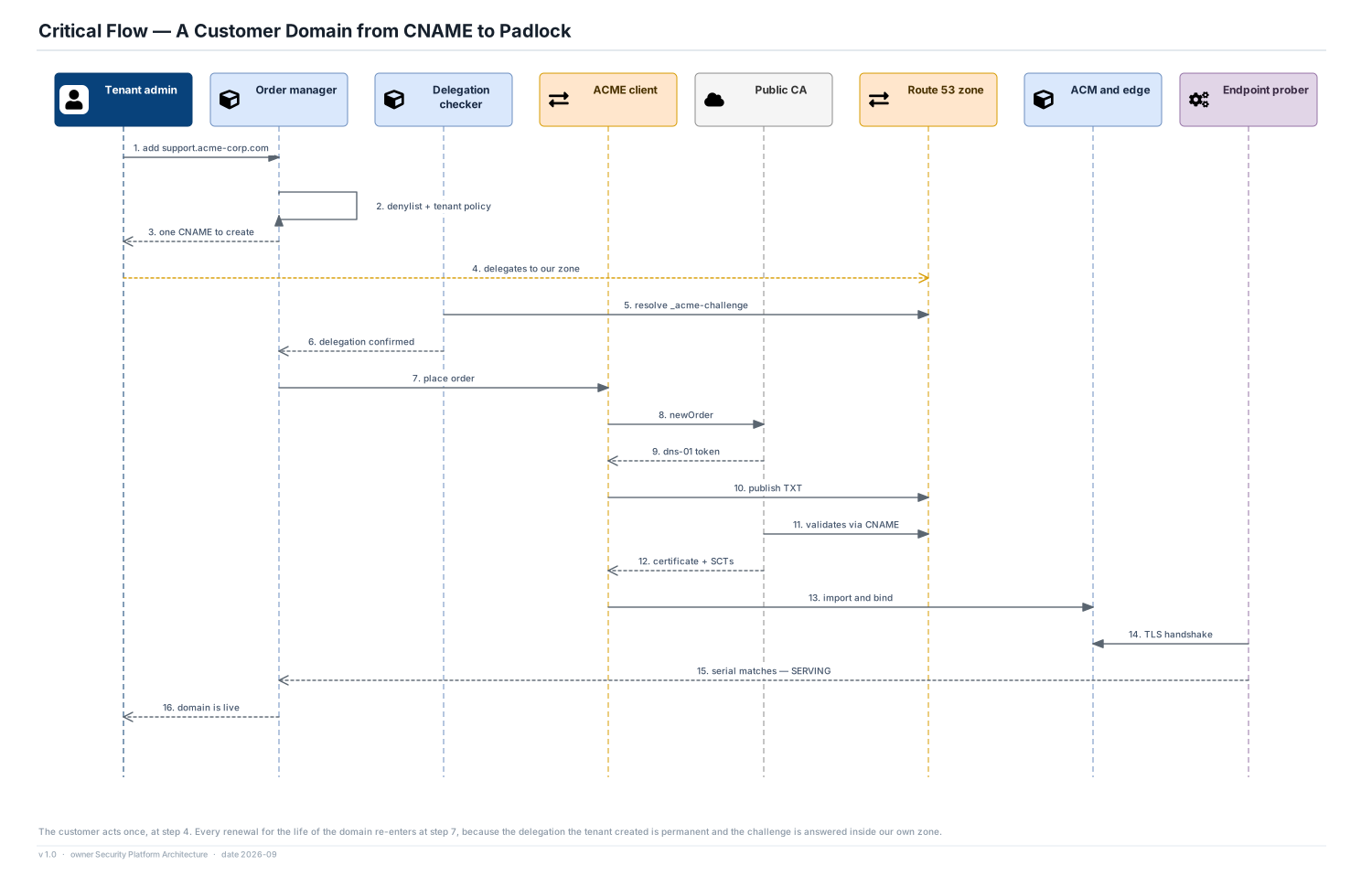
- Policy and denylist checks happen before the customer is asked for anything, so a hostname the platform must refuse is refused immediately rather than after a failed validation.
- The delegation the tenant creates at step 4 is permanent; every renewal re-enters at step 7 and the tenant is never asked again.
- The flow does not end at issuance: steps 14 and 15 are the probe confirming the serial is actually being presented at the edge.
Targets
- Order placed to certificate installed, delegation already in place: p95 ≤ 90 seconds, p99 ≤ 10 minutes — DNS propagation dominates the tail (stated assumption).
- New domain, delegation created to padlock serving: ≤ 15 minutes p95.
Risks
- Rate limits at the public CA are per registered domain, so a tenant onboarding many subdomains at once can exhaust a shared budget. Queueing rather than failing is a requirement, not an optimisation.
- A domain pointed at the platform that should not be — a lookalike or a platform-adjacent name — is refused by denylist before validation, and re-proof of control is required on a cadence rather than trusted indefinitely.