Webhook Delivery Service · View 05 of 20 · People and journeys
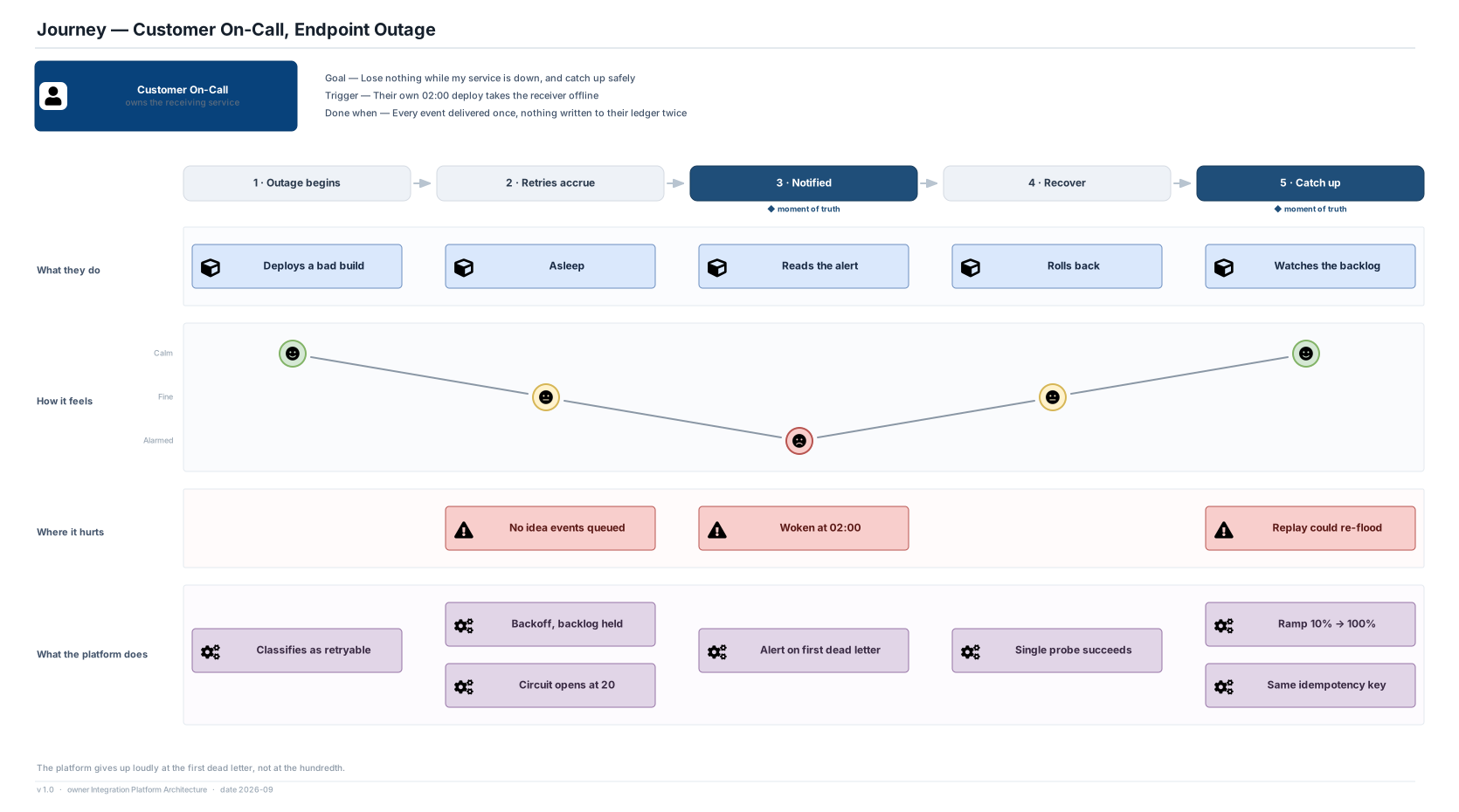
What the platform owes them
- Hold the backlog, and classify correctly: a connection refused is retryable, and retrying it for 72 hours is the product.
- Stop hammering. The circuit opens at 20 consecutive failures and probes once every five minutes, so the platform is not adding load to someone else's incident.
- Tell them at the first dead letter, through a channel independent of the broken endpoint — that is the actionable moment (ADR-09).
- Ramp on recovery. An endpoint that just came back is the one least able to absorb a burst, so resumption goes 10% to 100% over five minutes (ADR-08).
The second moment
- Catch-up is marked as a moment because a replay is a load test the customer runs against themselves. Rate caps, bulk confirmation, and the same idempotency key across every replay are what make it survivable (ADR-10).
- The platform prefers a duplicate to a loss in every ambiguous case, and says so in the consumer contract rather than implying an exactly-once it cannot deliver (ADR-04).
Open
- Auto-disable after 72 hours is the platform unilaterally breaking a customer's integration during that customer's own outage. It is defensible only because the backlog survives and the notification is reliable — and both of those are assumptions until measured (ADR-14).