Webhook Delivery Service · View 04 of 20 · People and journeys
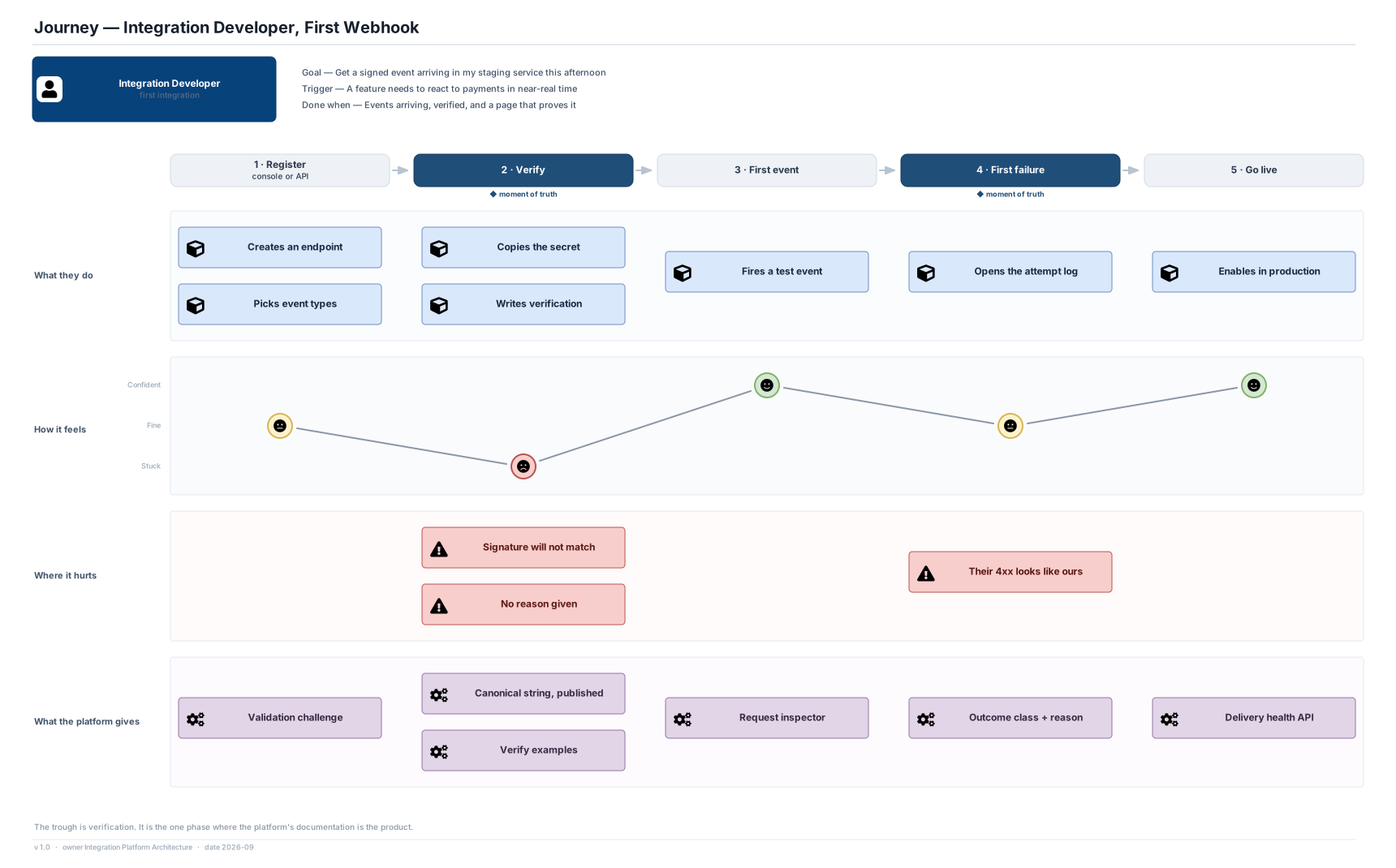
The trough is verification
- Every webhook platform's support load concentrates in one place: a developer whose recomputed signature does not match and who has no way to find out why.
- The causes are always the same — the body was re-serialised by a framework before they hashed it, or the timestamp was not in the signed material, or they used the wrong secret during a rotation.
- The architectural answer is not a better error message. It is a published canonical string, the raw bytes available in the request inspector, and worked verification examples in the languages the customer base actually uses (ADR-06).
Design consequences
- An endpoint that has never once succeeded is never enabled. The validation challenge in phase 2 is a requirement, not onboarding polish.
- The fourth phase — first failure — is marked as a moment because a 4xx classified as permanent stops retries immediately. If the developer cannot tell their 4xx from the platform's, they lose events and blame the platform.
Assumptions
- Verification examples in six languages is a stated assumption; the real number is whatever covers 90% of the customer base's stacks.
- The whole journey fitting in an afternoon is the target this platform is designed against, not a measurement.