Usage Metering & Billing Pipeline · View 08 of 22 · Structure
Decisions
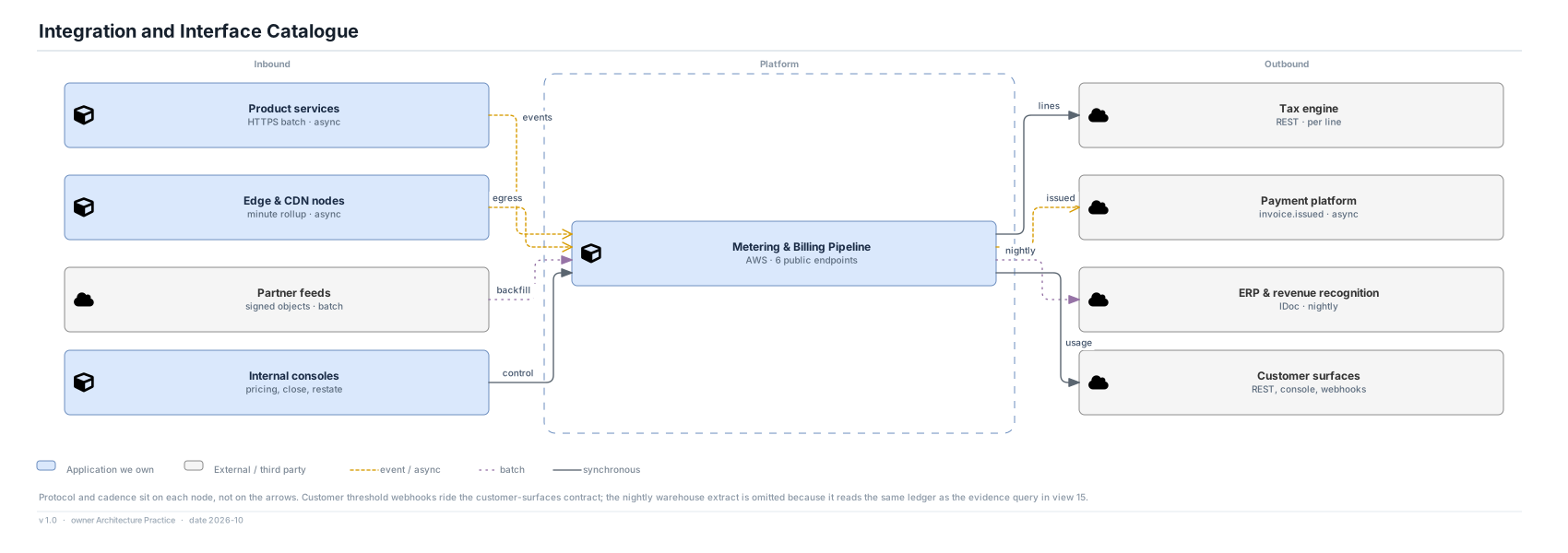
- One inbound event contract for product services, edge nodes and partner feeds. A separate partner path would need its own deduplication and its own validation, and would be the first thing to drift.
- Every outbound interface is fed from a durable outbox, so a downstream outage costs latency and never an invoice. This is what lets the invoice run complete regardless of the payment platform's health.
- Internal consoles are modelled as one inbound interface because they share an authorisation model and an audit path, even though they serve three different actors.
Assumptions
- Downstream consumers are idempotent on invoice identifier, which is what makes replay safe (stated assumption, and a contract worth writing down with each owner).
- Partner feeds arrive as signed objects at most daily, so backfill never competes with live ingestion for capacity.
Accepted clutter
- Two route-check clutter warnings remain on this view: two edge labels sit close to a neighbouring line. Shortening them further would cost the reader the cadence information, and reducing the catalogue below four interfaces a side would defeat the view's purpose.