Usage Metering & Billing Pipeline · View 06 of 22 · Structure
Decisions
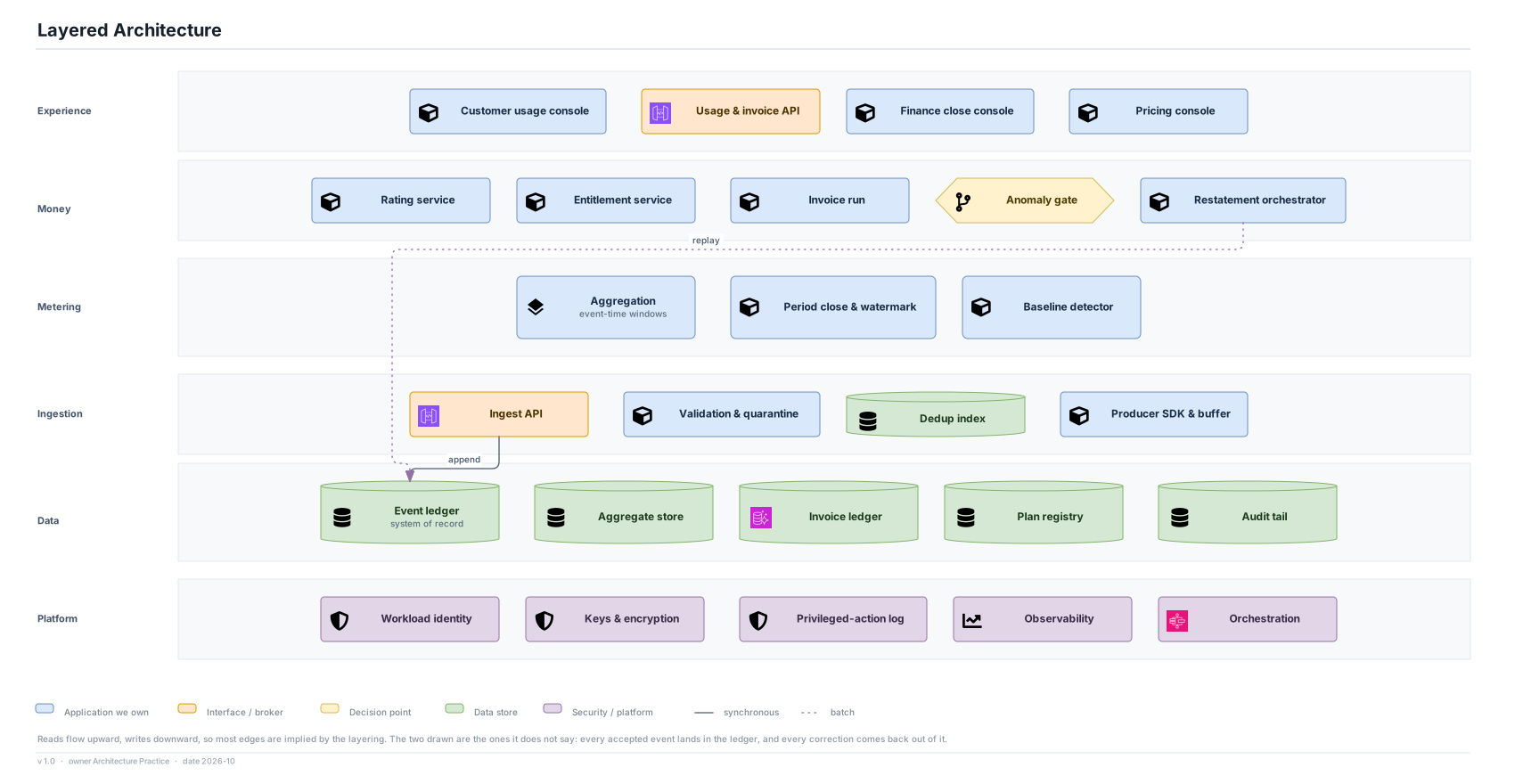
- Metering and Money are separate layers rather than one billing layer. Measurement is physics and money is policy: they change at different rates, are owned by different people, and fail differently.
- Nothing in the Money layer is authoritative. Every figure in it derives from the Data layer below, which is what makes a pricing error correctable rather than permanent.
- The Platform layer is deliberately thin and holds nothing domain-specific, so a change of cloud primitive does not reach into the domain.
Reading it
- Reads flow upward, writes downward, so most edges are implied. The two drawn are the ones the layering does not say: every accepted event lands in the ledger, and every correction comes back out of it.
- Producer SDK sits in Ingestion rather than Experience because its durable buffer is part of the delivery guarantee, not a client convenience.
Risks
- A layered picture invites a layered deployment. It is not one — view 16 shows the actual topology, and the Money layer's invoice run is a scheduled job, not a service.
- The Experience layer's four surfaces have four different authorisation models; view 21 is where that is actually resolved.