Usage Metering & Billing Pipeline  ·  View 04 of 22  ·  People and journeys

Journey — Predicting the Bill

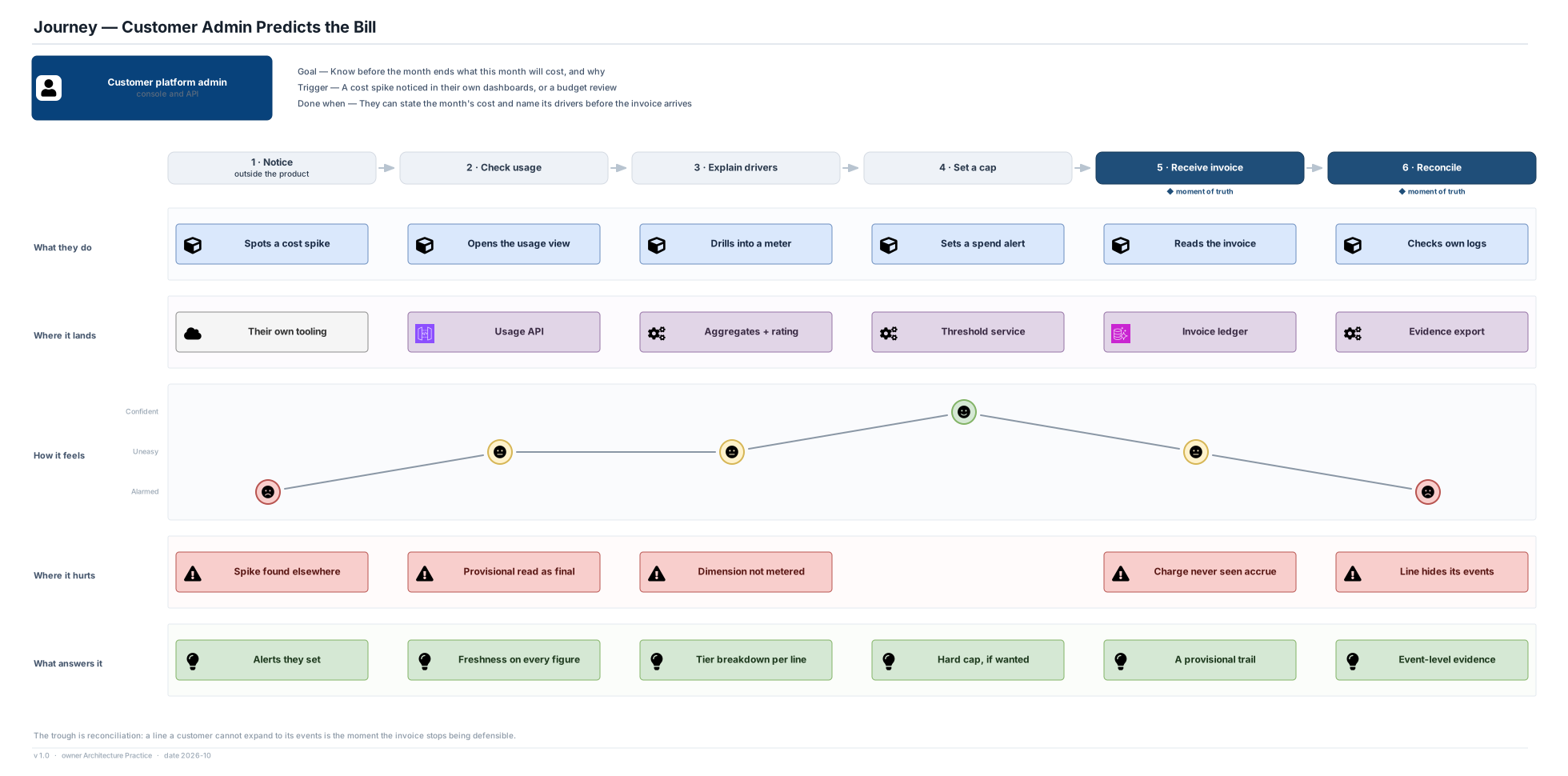
A customer admin trying to know the month's cost before the invoice arrives, and the two places it goes wrong.

Editable source SVG draw.io All views
Customer platform admin console and API Goal — Know before the month ends what this month will cost, and why Trigger — A cost spike noticed in their own dashboards, or a budget review Done when — They can state the month's cost and name its drivers before the invoice arrives 1 · Notice outside the product 2 · Check usage 3 · Explain drivers 4 · Set a cap 5 · Receive invoice ◆ moment of truth 6 · Reconcile ◆ moment of truth What they do Spots a cost spike Opens the usage view Drills into a meter Sets a spend alert Reads the invoice Checks own logs Where it lands Their own tooling Usage API Aggregates + rating Threshold service Invoice ledger Evidence export How it feels Confident Uneasy Alarmed Where it hurts Spike found elsewhere Provisional read as final Dimension not metered Charge never seen accrue Line hides its events What answers it Alerts they set Freshness on every figure Tier breakdown per line Hard cap, if wanted A provisional trail Event-level evidence Journey — Customer Admin Predicts the Bill The trough is reconciliation: a line a customer cannot expand to its events is the moment the invoice stops being defensible. v 1.0 · owner Architecture Practice · date 2026-10

The trough, and the answer

  • The designed low point is reconciliation: a line the customer cannot expand to its events is the moment the invoice stops being defensible, and the moment a support ticket becomes the only route. The answer is the evidence export in view 15, backed by the 400-day queryable window.
  • The second low point is the first phase: the spike was found in the customer's own tooling, not ours. Customer-configurable spend alerts exist to move that discovery inside the platform.

Assumptions

  • Freshness of 5 minutes at p95 is good enough for prediction; sub-minute would require stream rating, which is Phase 2 (stated assumption).
  • A customer runs independent telemetry and will reconcile against it. If they do not, the evidence path is over-engineered — and the auditor still needs it.

Risks

  • A provisional figure read as final is the most likely source of a complaint that is not a defect. Labelling is a product decision the architecture can only enable.
  • If a dimension was never metered, no amount of evidence explains the line; new dimensions cannot be backfilled from events that never carried them.