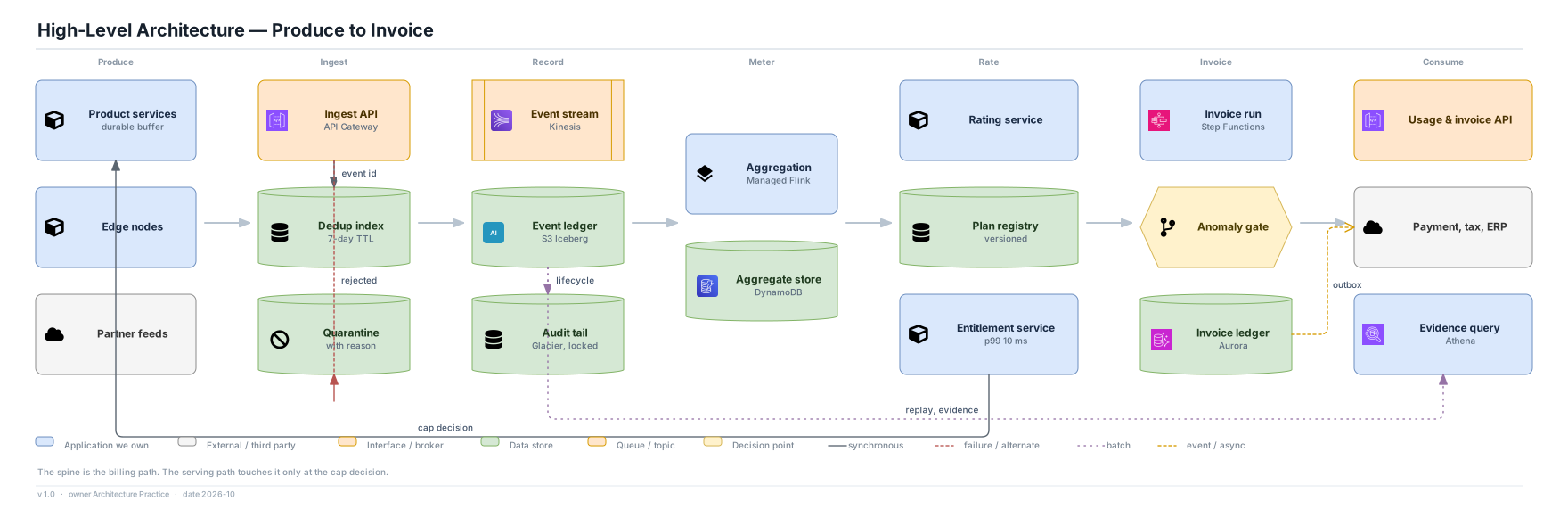
Usage Metering & Billing Pipeline · View 02 of 22 · Context and scope
Decisions
- Ingest acknowledges only after the event is durably replicated into the ledger, so a 202 is a billing guarantee rather than a receipt.
- Rate and Invoice are separate stages because they fail differently: rating is per-account and retryable, the invoice run is per-period and must not double-issue.
- Evidence query reads the ledger directly rather than the aggregate store, so a dispute is answered from the record and not from a projection of it.
Targets
- Event acceptance p99 ≤ 50 ms, p99.9 ≤ 200 ms in-region (stated assumption).
- Usage visible to customers p95 within 5 minutes, p99 within 15 (stated assumption).
- Invoice run closes every account within 6 hours of period close (stated assumption).
Risks
- The cap decision is the one synchronous dependency the product has on this platform; its availability requirement is therefore the product's, not billing's.
- The spine hides back-pressure: a stalled aggregator shows up as stale usage views long before it shows up as a wrong invoice.