Storage Tiering Service · View 09 of 31 · 3 · Structure
Why these properties exist on-premises
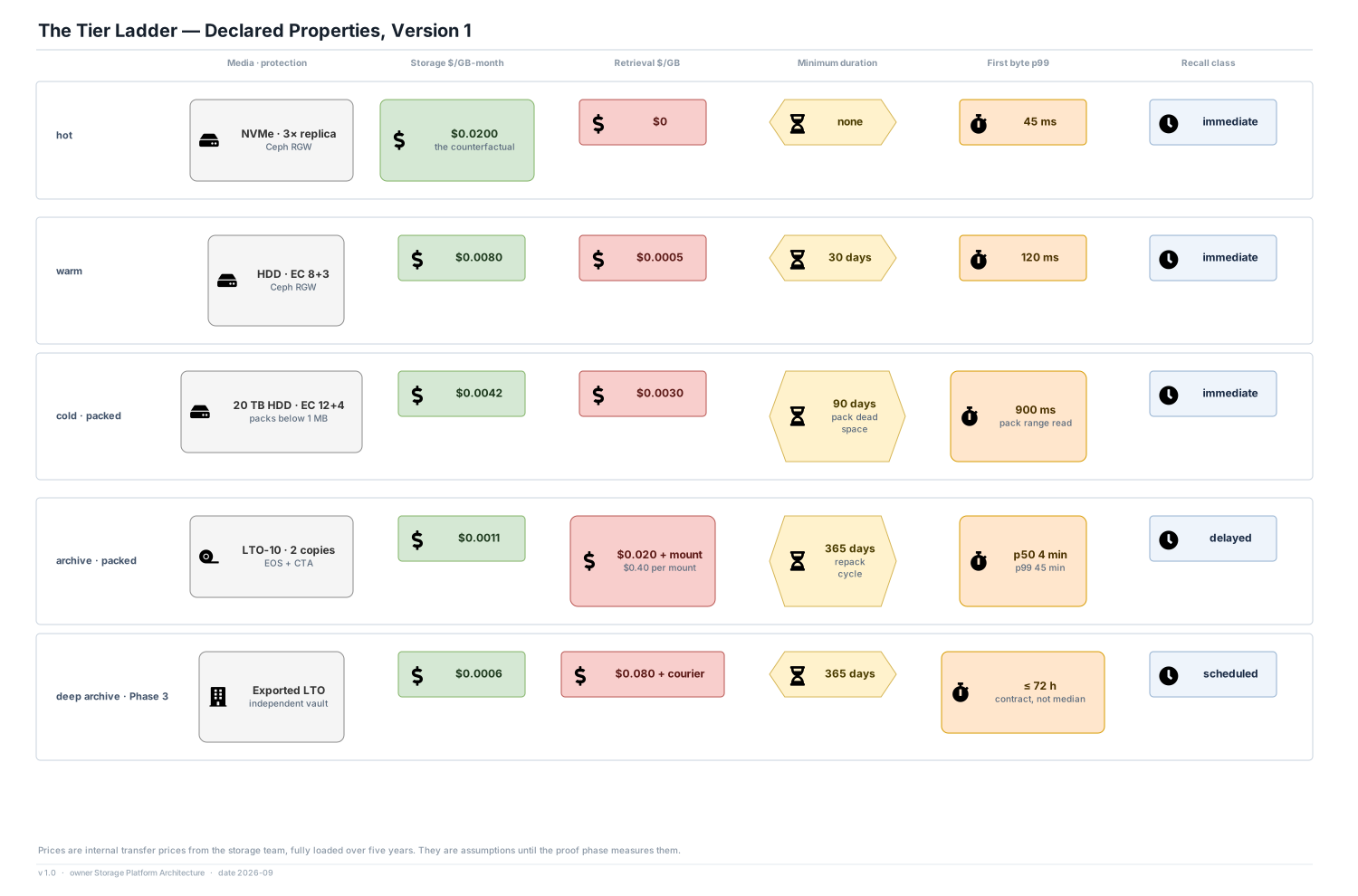
- Retrieval price is real: cold reads reconstruct erasure-coded stripes across twelve disks, and archive reads spend drive-hours and robot mounts that interactive recalls also need.
- Minimum duration is real where media is immutable. Deleting a member of a cold pack leaves dead space until compaction; deleting data on tape leaves it until the cartridge is repacked. The 90- and 365-day figures are those reclaim cycles, priced.
- Warm has a 30-day minimum as a policy choice: it prices in the movement itself so that a copy made yesterday is not undone today.
Decisions
- The ladder is versioned configuration signed and stored in Git. Every placement records the ladder version it was made under, so adding or retiring a tier never re-tiers existing objects (ADR-06).
- Cold packs only objects below 1 MB; larger objects are stored whole. Archive packs everything, because tape punishes small files.
- Callers see only the recall class column.
Assumptions
- Prices are fully loaded over five years: hardware, power, space, network and a staff share. They are placeholders until the storage team publishes measured figures in the proof phase.
- A planning mix of 30% hot, 20% warm, 30% cold and 20% archive by bytes gives about $0.0091 per GB-month before tiering charges.