Spot Capacity Orchestrator · View 22 of 32 · 5 · Runtime
Decisions
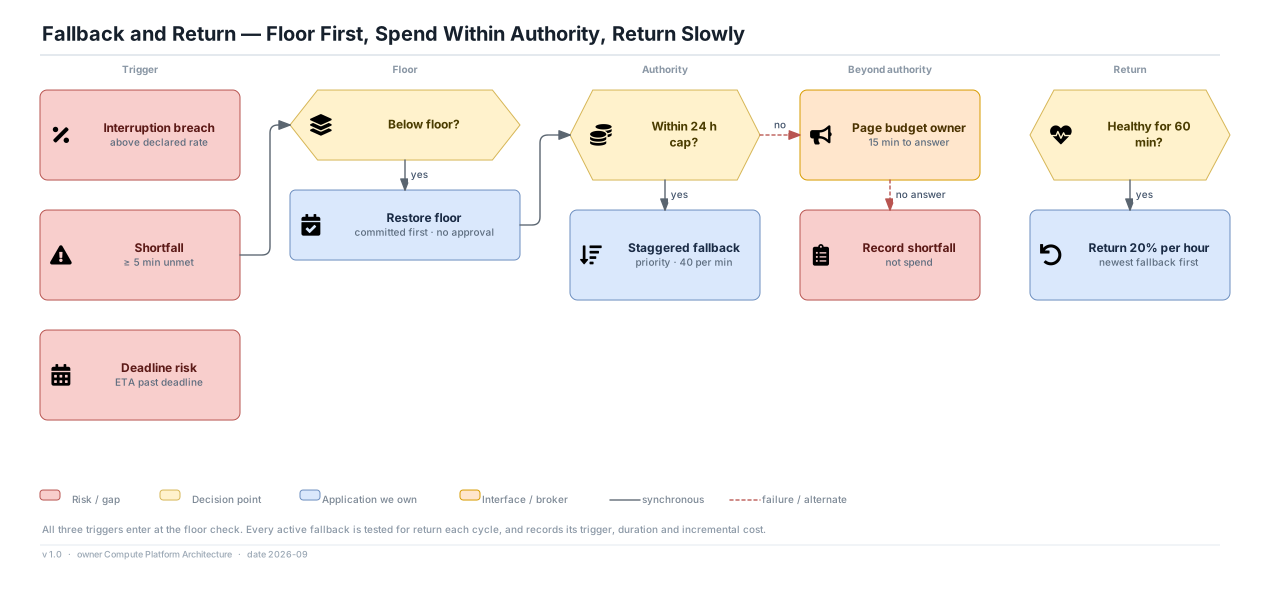
- Restoring the floor is pre-authorised by the tier and draws first on committed capacity that is already paid for, so it is automatic and nearly free at the margin.
- Fallback above the floor is automatic up to the contract's 24-hour spend cap. Beyond it the arbiter pages the named budget owner and records shortfall if nobody answers in 15 minutes. A cost incident is allowed to become an availability incident, visibly, rather than an unbounded bill at 03:00.
- Fallback is staggered at 40 instances a minute per region in priority order: deadline risk, then tier. Every workload reaching for guaranteed capacity at once is a demand spike on the capacity every guaranteed tenant also wants.
Return
- Pools must be healthy for 60 minutes and below half the workload's declared interruption rate. Return then moves 20% an hour, newest fallback first. Hysteresis costs a little spend and prevents the fleet oscillating between purchase models.
Measured
- Each fallback records trigger, duration, instances and incremental cost against the workload, so the price of reliability is attributed rather than absorbed.