Service Mesh Platform · View 16 of 31 · 5 · Runtime
Decisions
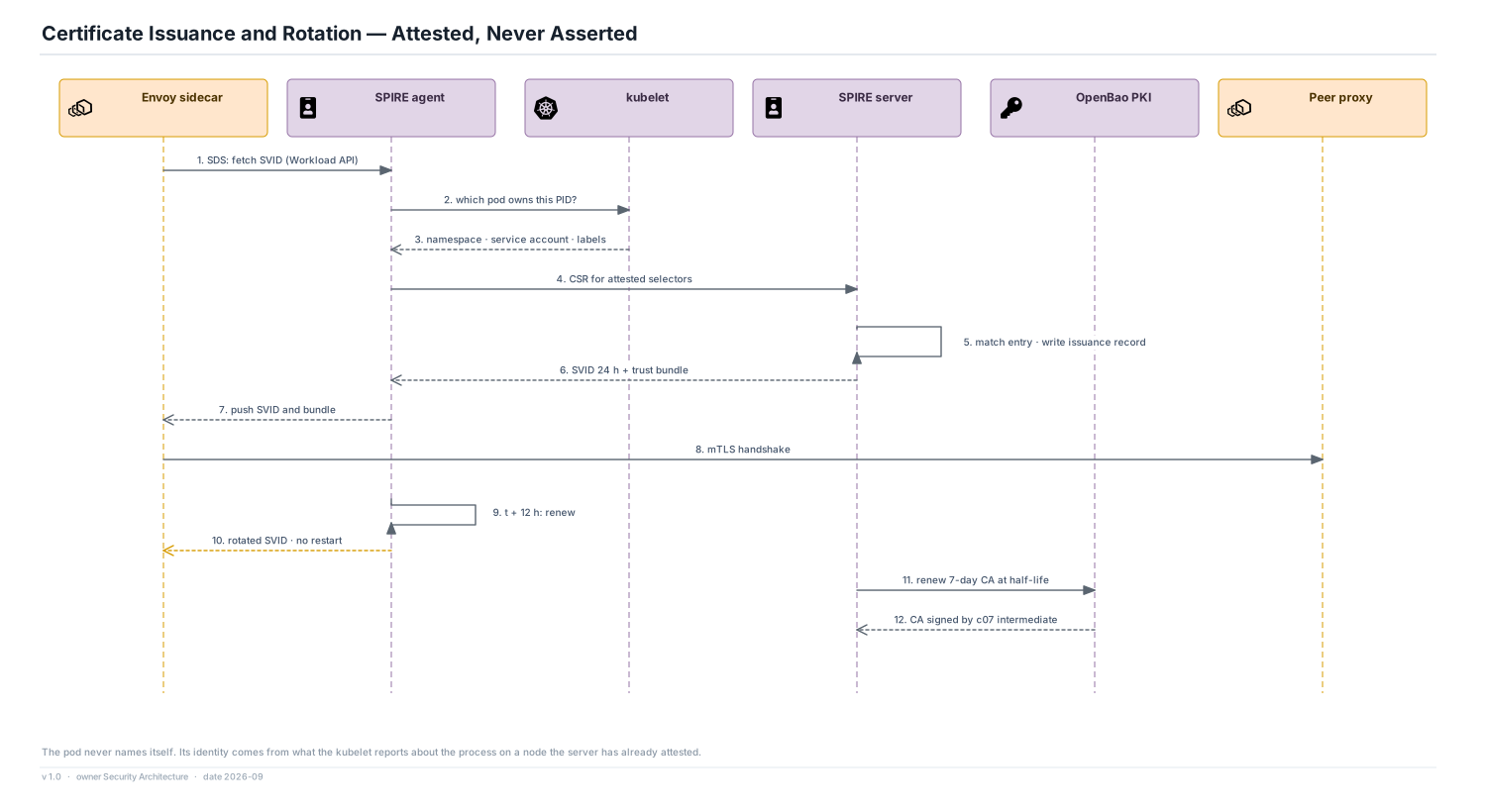
- The selectors come from the kubelet and from a node the server has already attested with a projected service-account token. Nothing the pod says about itself is an input.
- The issuance record is written by the server at signing time: serial, SPIFFE ID, node attestation, workload selectors, issuing CA. That is the evidence an auditor asks for.
- Envoy receives rotated certificates over SDS and swaps them in memory. Existing connections finish on the old certificate; new ones use the new one.
Targets
- Issuance p99 ≤ 2 s. 200 issuances a second sustained, 2,000 a second during a mass restart. At 2,000 proxies per cluster, the whole cluster re-issues in about a second of server time.
To prove
- SPIRE server throughput against a CloudNativePG datastore at 2,000 issuances a second, with registration entries generated by spire-controller-manager for 2,000 pods per cluster.