Secrets Distribution Service · View 01 of 34 · 1 · Context and scope
Decisions
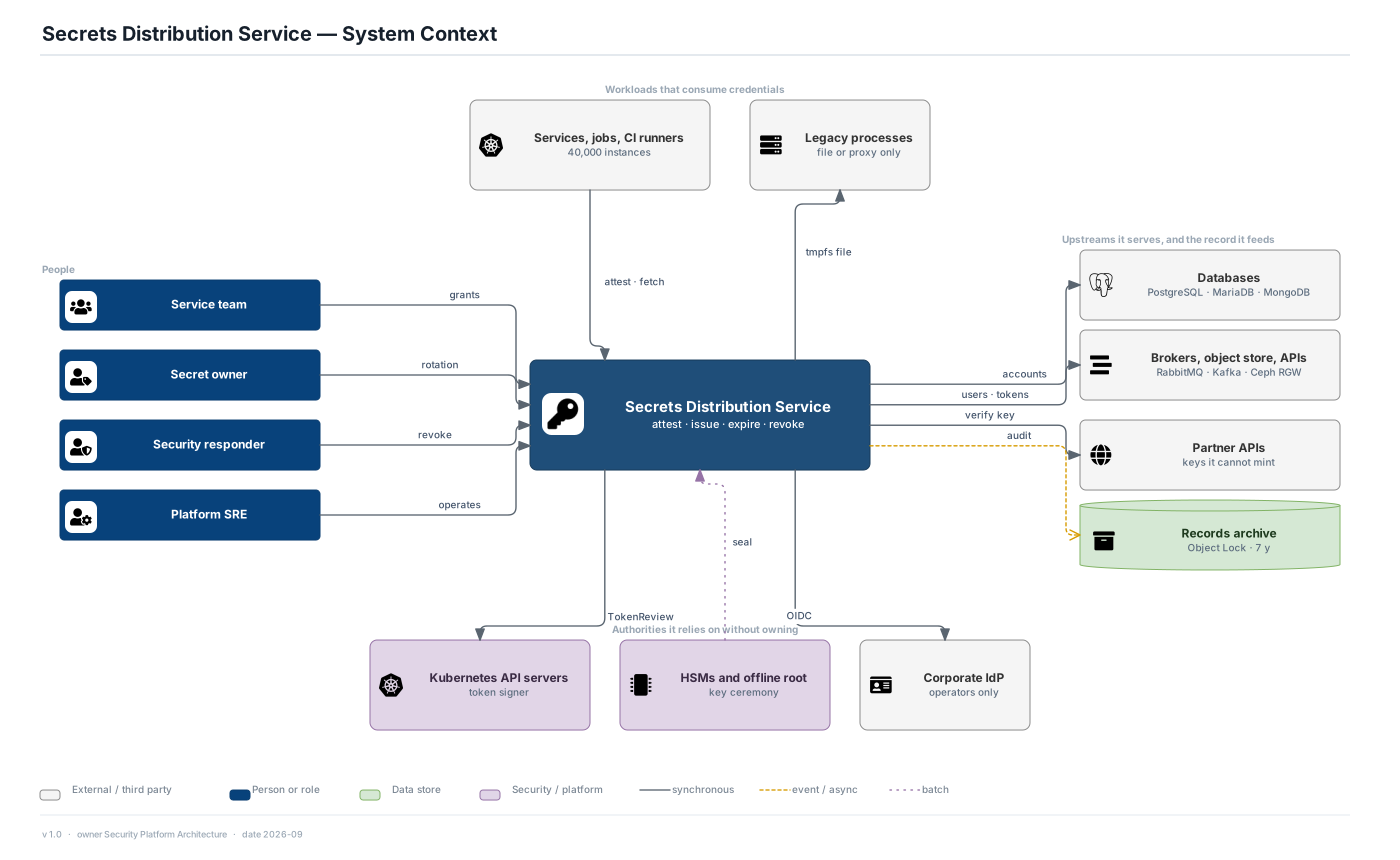
- The boundary is distribution, not the dependency. PostgreSQL still checks the password and the partner still validates the key; the platform's authority ends at whatever an upstream can be told to create or delete.
- The Kubernetes API servers and the HSMs sit outside. The first signs the tokens that start the chain of trust; the second holds the keys that end it. The platform consumes both and can leak neither.
- The records archive belongs to the records team, not to the platform. Evidence that the platform's own operators could edit is not evidence.
Assumptions
- A few thousand services, 40,000 workload instances, three environments, two sites; 3,200 custodial secrets, 700 brokered roles and 14 upstream providers. All figures are the requirement's stated assumptions.
- The requirement targets Google Cloud. This design solves the same problem on hardware the organisation owns with open-source software only; the mapping is in the README.
Deliberately out
- Human sign-in to applications, TLS certificates for services (the mesh's job), code-signing policy, and the upstreams' own account models. The platform integrates with each and owns none.