Programmable Messaging API  ·  View 20 of 22  ·  Operations

Route Lifecycle

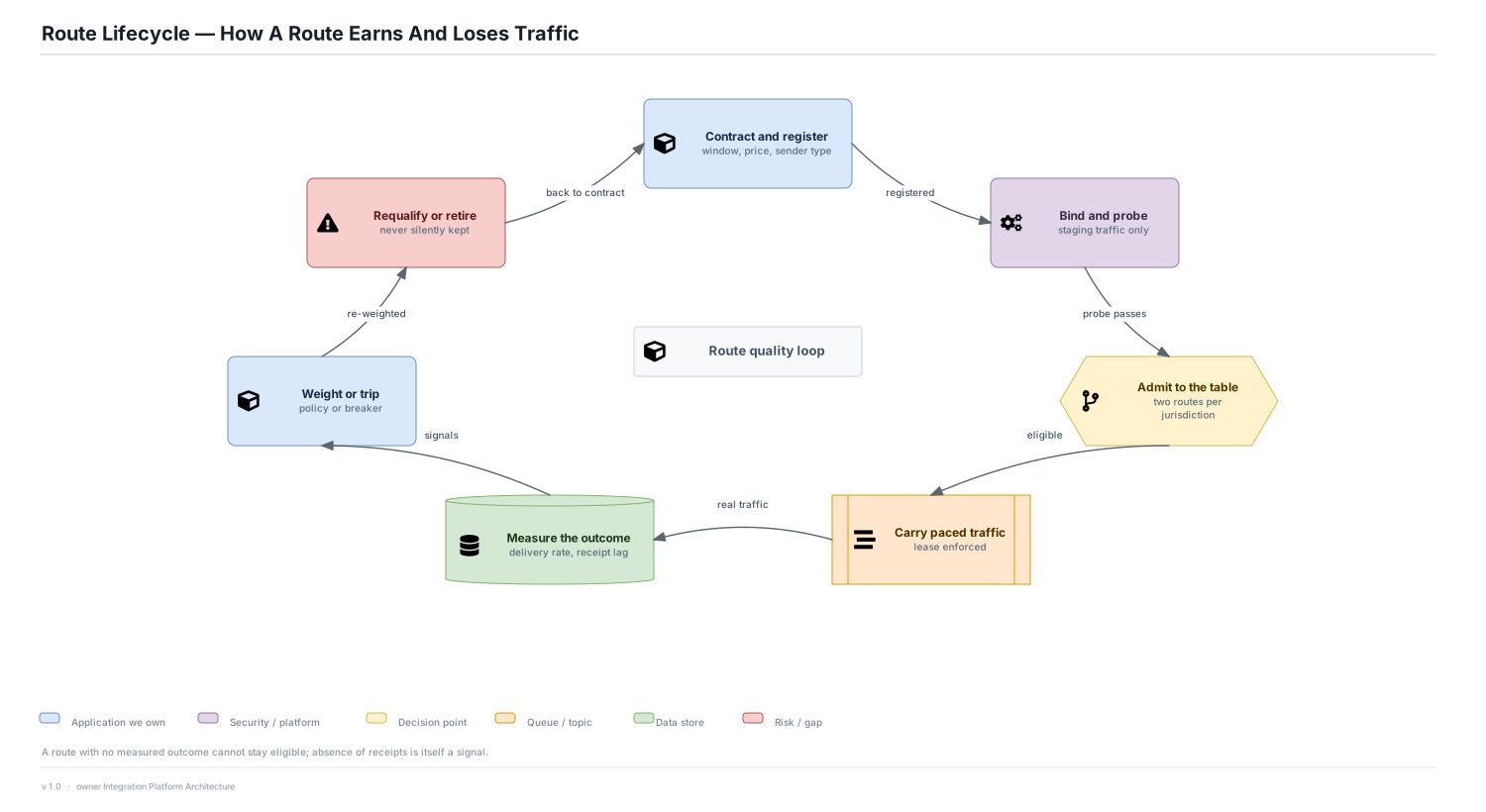
How a carrier route earns traffic, and how it loses it without anybody filing a ticket.

Editable source SVG draw.io All views
Contract and register window, price, sender type Bind and probe staging traffic only Admit to the table two routes per jurisdiction Carry paced traffic lease enforced Measure the outcome delivery rate, receipt lag Weight or trip policy or breaker Requalify or retire never silently kept Route quality loop registered probe passes eligible real traffic signals re-weighted back to contract Route Lifecycle — How A Route Earns And Loses Traffic Application we own Security / platform Decision point Queue / topic Data store Risk / gap A route with no measured outcome cannot stay eligible; absence of receipts is itself a signal. v 1.0 · owner Integration Platform Architecture

Decisions

  • A route cannot stay eligible without a measured outcome: the absence of receipts is itself a signal, not missing data.
  • Breaker trips are automatic for interactive traffic and advisory for bulk, because re-routing bulk spends the tenant's money.
  • Retirement is explicit — a route is requalified or removed, never quietly left in the table at zero weight.

Assumptions

  • At least two viable routes per channel and jurisdiction for interactive traffic; a single-route jurisdiction is reported as a risk.
  • Route quality is recomputed continuously and converges within minutes of a collapse.

Risks

  • Quality signals lag price changes, so a least-cost policy can pick a cheap route faster than the loop can discover it is bad.