Payment Checkout & Ledger Service · View 23 of 24 · Assurance
Decisions
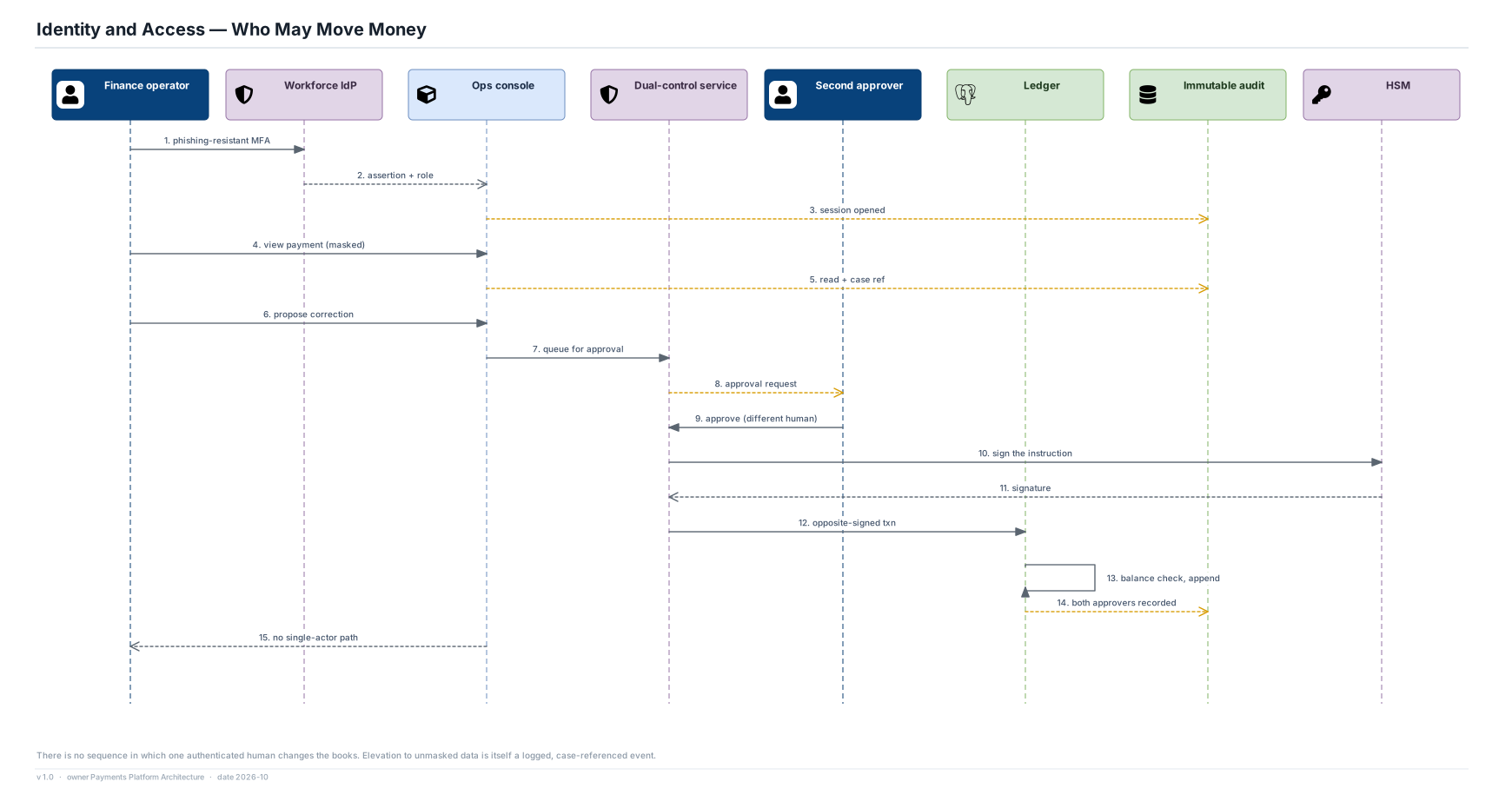
- Dual control is a service in the path, not a policy in a document. The proposal and the approval are separate authenticated acts by different humans (ADR-14).
- The instruction is signed in the HSM, so the approval is cryptographic evidence rather than a database row somebody could write.
- Amounts and identifiers are masked by default; elevation to unmasked data is itself a logged, case-referenced event.
Decisions
- Workforce access requires phishing-resistant MFA. A payments back office is a credential-phishing target by definition.
- Every read of payment data by a human is audited with the support case that justified it — the control that makes 'who looked at this' answerable.
Risks
- Dual control is only as strong as the separation between the two humans. Two operators on the same shift under the same pressure are a single control in practice, and that is an organisational risk this architecture cannot fix.