Payment Checkout & Ledger Service  ·  View 19 of 24  ·  Operations

Observability — Signal by Pipeline Stage

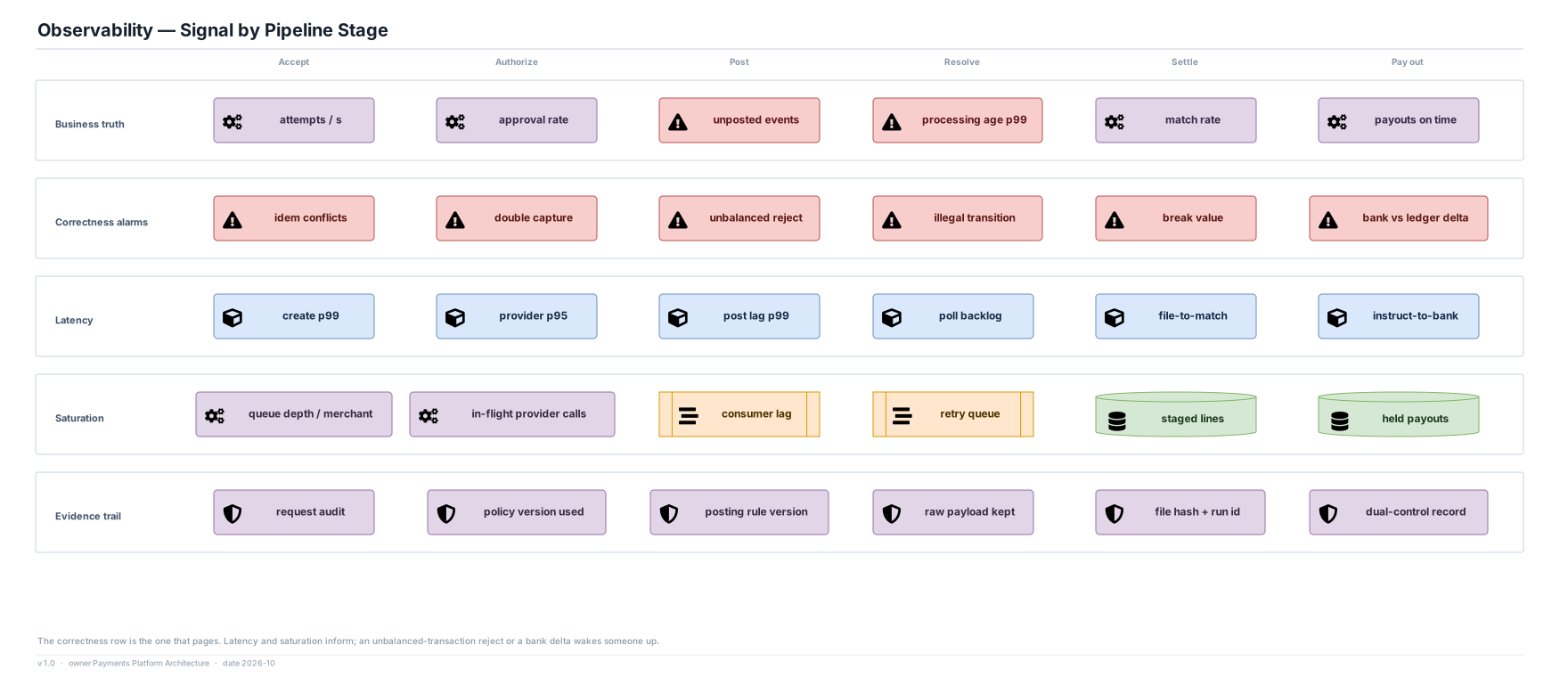
Five signal classes across six stages, and only one of the rows pages a human.

Editable source SVG draw.io All views
Accept Authorize Post Resolve Settle Pay out Business truth attempts / s approval rate unposted events processing age p99 match rate payouts on time Correctness alarms idem conflicts double capture unbalanced reject illegal transition break value bank vs ledger delta Latency create p99 provider p95 post lag p99 poll backlog file-to-match instruct-to-bank Saturation queue depth / merchant in-flight provider calls consumer lag retry queue staged lines held payouts Evidence trail request audit policy version used posting rule version raw payload kept file hash + run id dual-control record Observability — Signal by Pipeline Stage The correctness row is the one that pages. Latency and saturation inform; an unbalanced-transaction reject or a bank delta wakes someone up. v 1.0 · owner Payments Platform Architecture · date 2026-10

Decisions

  • The correctness row is the paging row. An unbalanced-transaction rejection, a double capture or a bank-versus-ledger delta wakes someone up; latency and saturation inform (ADR-16).
  • Every stage carries an evidence cell, because 'which policy version decided this' and 'which posting rule booked this' are audit questions, not debugging ones.
  • Unposted events and processing age are business metrics, not infrastructure ones: they measure the width of the window from view 13.

What is deliberately not alarmed

  • Approval rate is watched per provider and per issuer band but does not page: it moves for commercial reasons the platform cannot fix at 3 a.m.
  • A single break does not page. Break value and break age do.

Risks

  • Silent quality regression in the routing policy — a change that quietly lowers approval rate — has no natural alarm. It is caught by a held-back control arm, which this design names but does not fully specify.