Payment Checkout & Ledger Service · View 13 of 24 · Runtime
The window
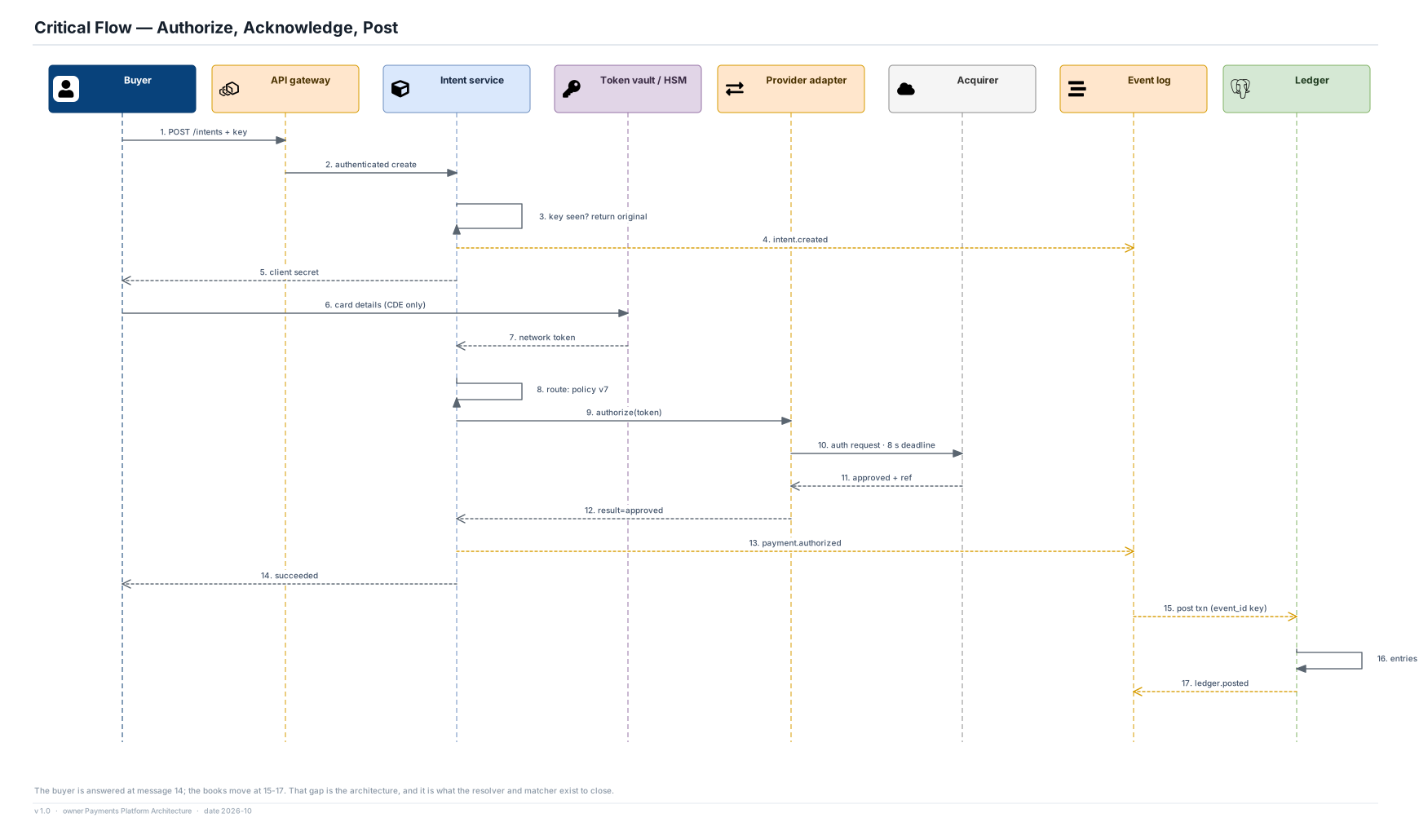
- The buyer is answered at message 14. The books move at 15–17. In between, a payment has succeeded in the world and is not yet in the ledger (ADR-01).
- Posting synchronously inside the request would close the window and make a ledger partition into a checkout outage. At 4,000/second during a sale, that is the more expensive failure.
Decisions
- Card details go from the buyer's browser to the cardholder data environment directly, never through the application zone (ADR-11).
- The routing decision is taken and recorded before the provider call, with the policy version stored on the attempt (ADR-06).
- The ledger checks that entries sum to zero before appending. An unbalanced transaction is rejected, not corrected later (ADR-02).
Numbers
- Provider deadline 8 s hard, p95 total buyer-visible confirm ≤ 2.5 s.
- Ledger posting p99 ≤ 2 s after a terminal event — the stated width of the window.
- Balance visible to the merchant within 30 s of posting.