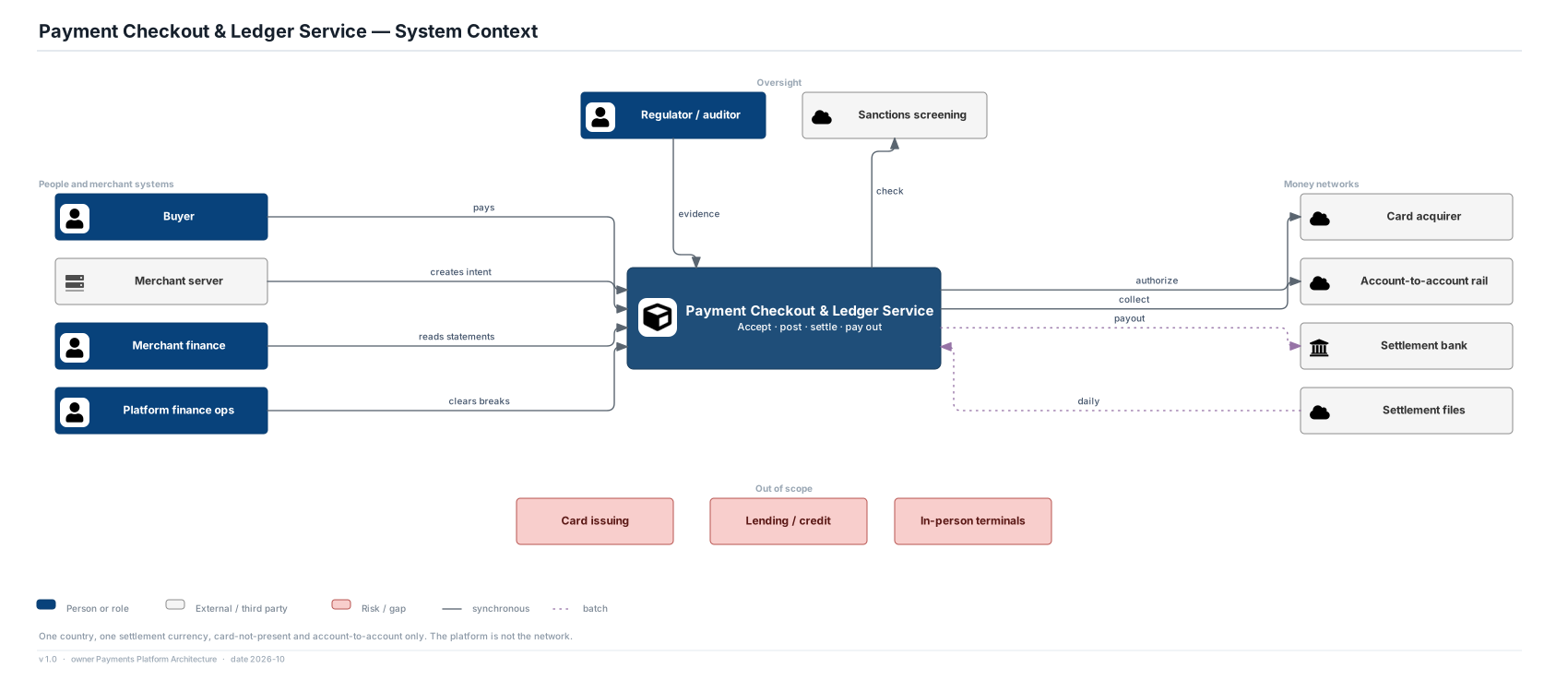
Payment Checkout & Ledger Service · View 01 of 24 · Context and scope
Decisions
- One country, one settlement currency, multi-currency presentment only. Residency rules make a multi-country single instance a different architecture, not a bigger one.
- Card-not-present and account-to-account only. In-person terminals bring a whole second trust model (EMV kernels, key injection, offline capture) and are excluded.
- The platform is a payment service, not a payment network: it never clears or settles on its own rails.
Assumptions
- 50,000 merchants, the largest 20 generating 60% of volume — so fairness between merchants is a day-one requirement, not a scale-up concern.
- Four providers across two rails at steady state, with a fifth onboarding at any time.
- The regulator can demand reconstruction of any payment for 10 years.
Risks
- Every money network in the right-hand column is a system the platform cannot interrogate reliably. The entire design follows from that.
- Issuing and lending are excluded now, and both would add held-funds licensing that reshapes the ledger's account model (ADR-13).