Passkey Authentication Service · View 02 of 21 · Context and scope
Decisions
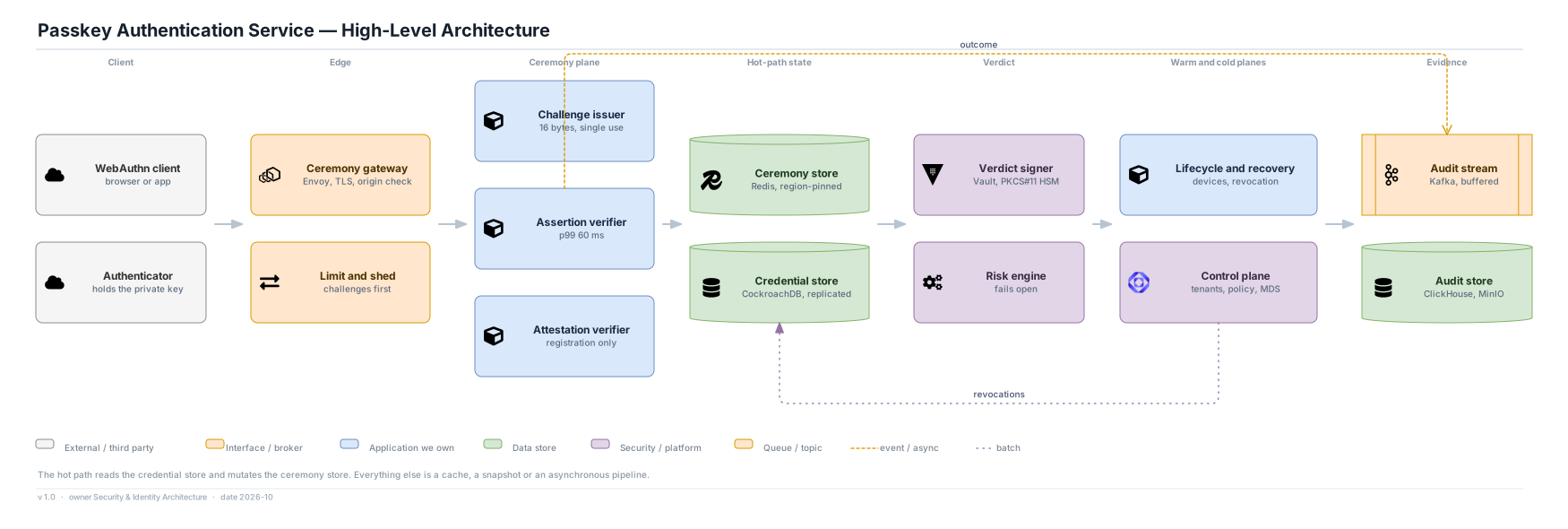
- The hot path reads the credential store and mutates the ceremony store. Nothing else on it is a write, which is what makes the latency target reachable without a distributed transaction in a login.
- Shedding happens at the edge and sheds challenge issuance before assertion verification: an in-flight ceremony is worth more than a new one.
- The risk engine sits beside the ceremony plane rather than in front of it, because a risk engine that can fail a login is a risk engine that can take the product down.
- Audit emission is asynchronous and buffered. A slow evidence pipeline must never be able to slow a ceremony.
Key numbers (assumed)
- 20,000 authentication ceremonies per second per region at steady state, 5× for 120 seconds at the working-day peak.
- Assertion verification p50 15 ms, p99 60 ms server-side, excluding the time the user spends touching a sensor.
- Authentication path availability 99.99% monthly per region; management plane 99.9%.
What this view omits
- The verdict-signing and risk calls, which view 13 sequences properly rather than squeezing onto a stage boundary.
- Configuration reads: every service reads a locally cached tenant policy, which would be an arrow from everything to everything.