Passkey Authentication Service · View 01 of 21 · Context and scope
Decisions
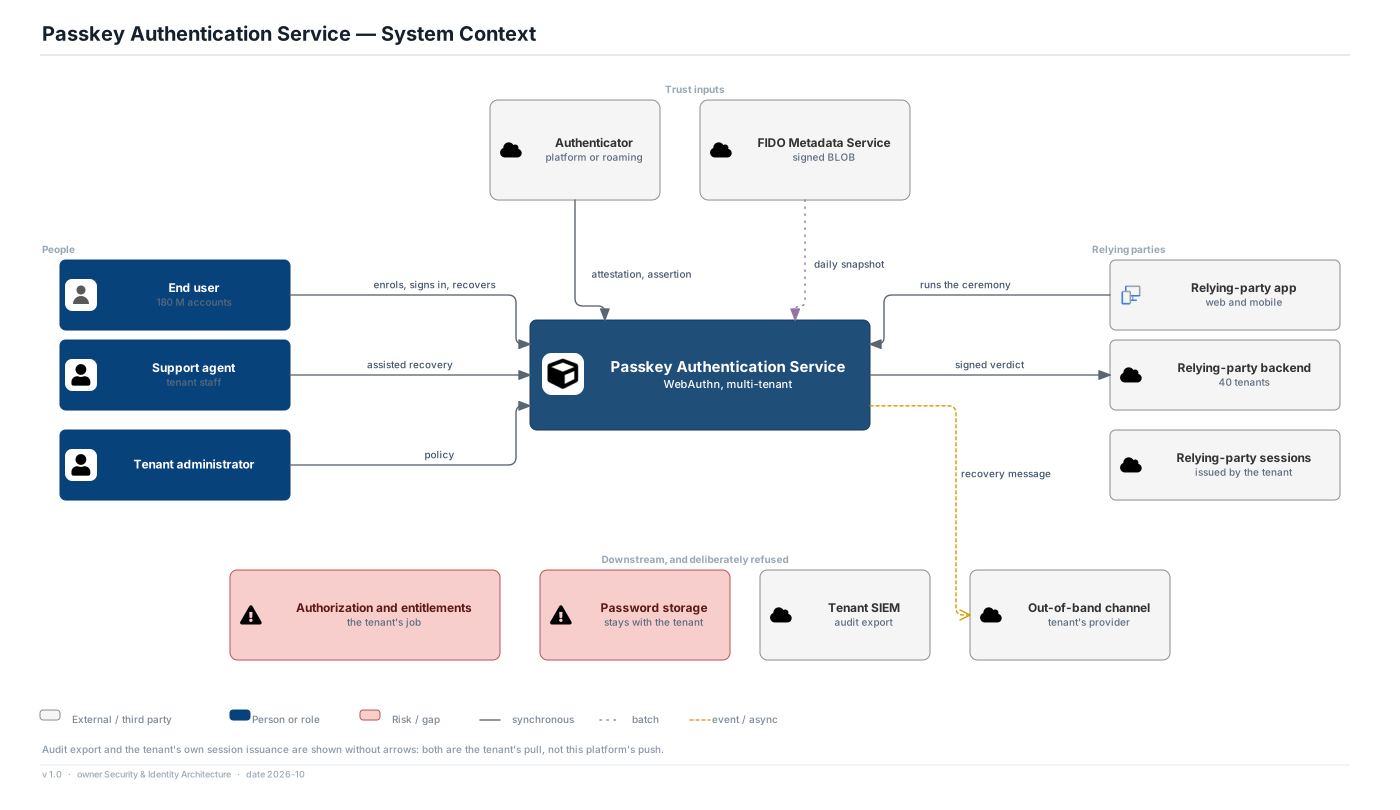
- The platform authenticates and nothing else. Authorization, entitlements and the tenant's session all stay outside the boundary, which is what keeps a compromise of this platform from becoming a compromise of a tenant's data.
- The authenticator is drawn as an external party rather than a client detail, because the only secret that matters never crosses the boundary at all.
- The FIDO Metadata Service is an input, not a dependency: it arrives as a signed snapshot on a daily pull and the hot path never calls it.
- The out-of-band recovery channel belongs to the tenant, so the weakest link in a passwordless account is contractually theirs and visibly so.
Deliberately refused
- Password storage and verification — kept by the tenant for the migration window, then removed by them.
- Authorization and entitlement decisions, which the identity-and-access-management use case covers.
- Session issuance, logout and step-up: the platform returns a signed verdict and the relying party issues its own session.
- Directory synchronisation and provisioning.
Assumptions
- 180 million end-user accounts across 40 relying-party tenants, 2.3 credentials per user.
- Audit export is a pull by the tenant's SIEM from the evidence store, not a push from the platform.
- Every tenant has at least one configured recovery route; the platform refuses to serve production traffic for one that does not.