No-Code SaaS Automation Platform · View 14 of 21 · Runtime
What this view proves
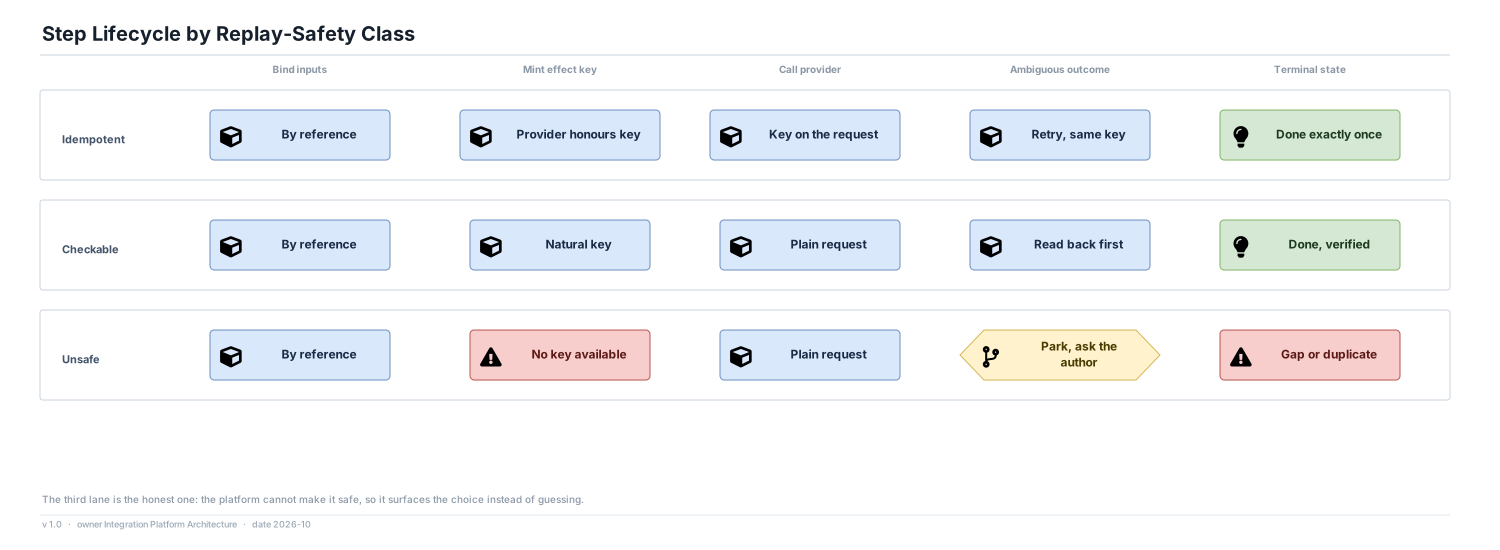
- The three lanes diverge at exactly one stage — the ambiguous outcome — and converge nowhere. That is why replay safety is a stored property of an action rather than a platform-wide retry policy.
- The third lane is the honest one. For an action with no idempotency key and no read-back, the platform cannot deliver at-most-once visible effect, so it parks and surfaces the choice rather than guessing on the author's behalf.
- Automatic retry of an ambiguous outcome is forbidden in the unsafe lane. That is a refusable requirement, and it is the reason the class exists at all.
Assumptions
- ≤ 1 duplicate visible effect per 1,000,000 step attempts in the idempotent and checkable lanes.
- The unsafe lane has no duplicate SLO, by construction: it trades a possible gap for the duplicate, and says so in the product.
Open
- Core Architecture Question 3: whether 'park and ask' is the right default, or whether some unsafe actions should refuse publication outright without an explicit author acknowledgement.