Multiplayer Collaborative Canvas · View 22 of 23 · Assurance
Decisions
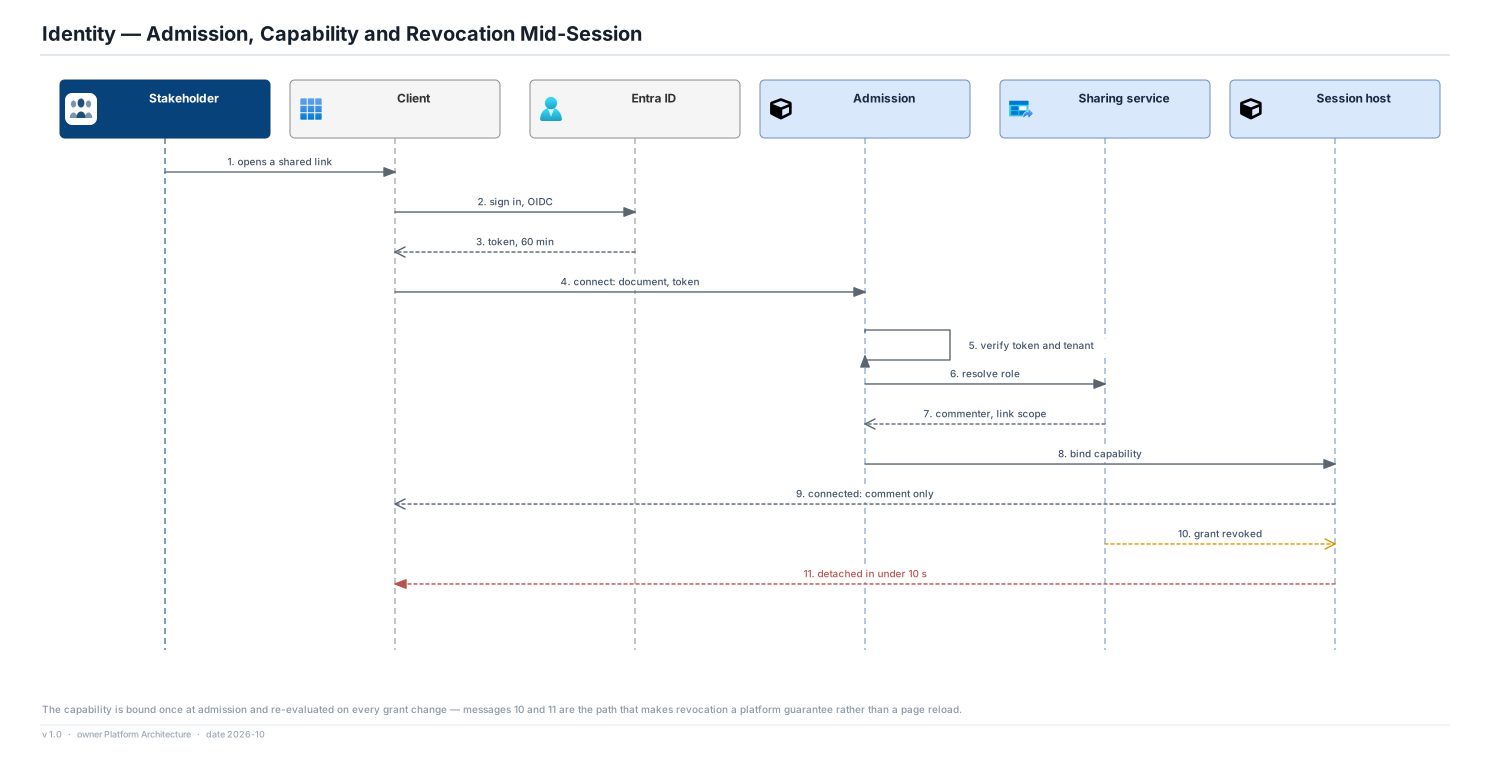
- The capability is resolved once at admission and bound to the connection, so the hot path never asks the sharing service a question (ADR-14).
- Every grant change pushes to the sessions it affects: messages 10 and 11 are the revocation path, and the requirement is ≤ 10 s from grant change to a detached or downgraded client.
- During a control-plane outage, existing sessions continue on their cached capability for at most 5 minutes and new admissions fail closed — availability for the people already working, nothing for the people who were not.
Numbers
- Token lifetime ≤ 60 minutes, renewed on the live connection; revocation effective ≤ 10 s.
- Capability cache grace 5 minutes. Both stated assumptions.
Risks
- The 5-minute grace window is a deliberate hole: a revocation issued during a control-plane outage can be up to 5 minutes late. The alternative — failing open or detaching every session — costs more than it buys.