Multiplayer Collaborative Canvas · View 21 of 23 · Assurance
Decisions
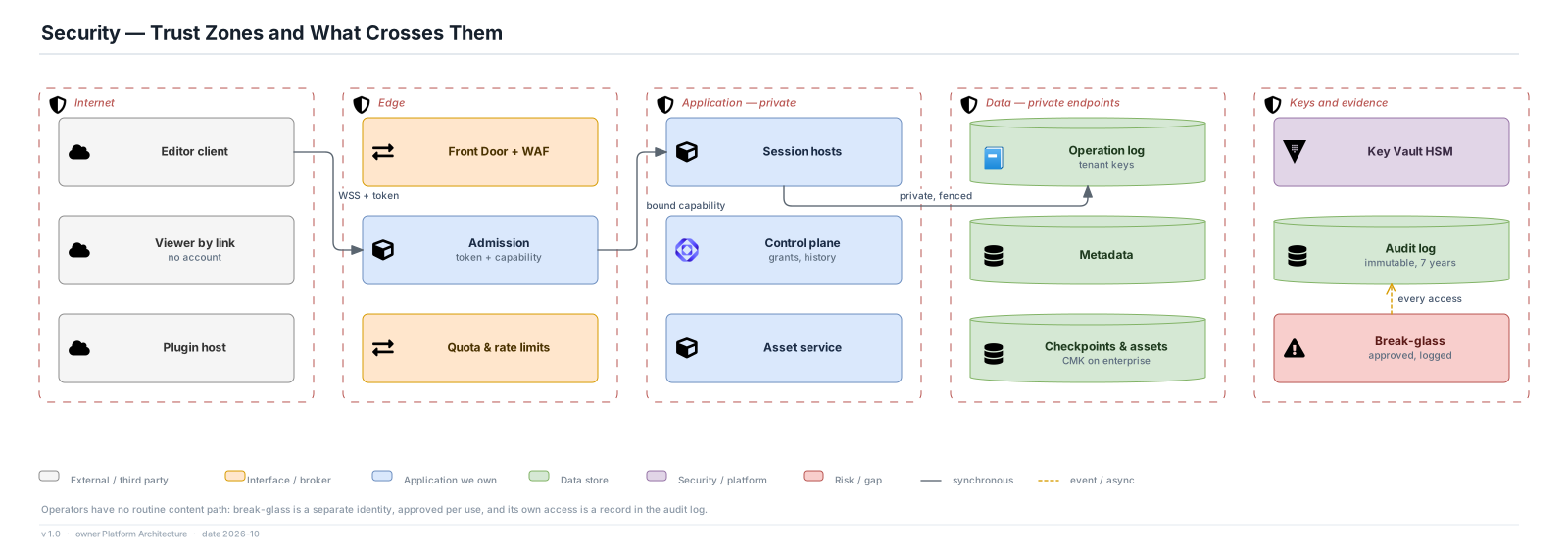
- Authority is bound at the edge and enforced at the session: every operation is authorised server-side against the capability on the connection, never against what the client's UI allowed (ADR-14).
- Link-shared viewers are first-class, unauthenticated callers. They are rate-limited, attributable and revocable immediately — the open surface is designed rather than tolerated.
- Operators have no routine content path. Break-glass is a separate identity, approved per use, and its own access is an audit record (ADR-15).
Crossings worth naming
- Internet → Edge: WSS with a short-lived token, renewed in-band so a connection never outlives its credential.
- Application → Data: private endpoints only, with tenant-scoped keys and customer-managed keys on the enterprise tier.
- Uploaded assets are hostile input: type-verified, size-capped, stripped of active content and location metadata, and scanned before any rendition is served.
Risks
- A share link is a bearer credential. Revocation is immediate, but a link that has already been pasted into a public channel has already been shared — the platform can only make revocation fast, not retroactive.