Leaderboard & Counting Service · View 19 of 21 · Assurance
Decisions
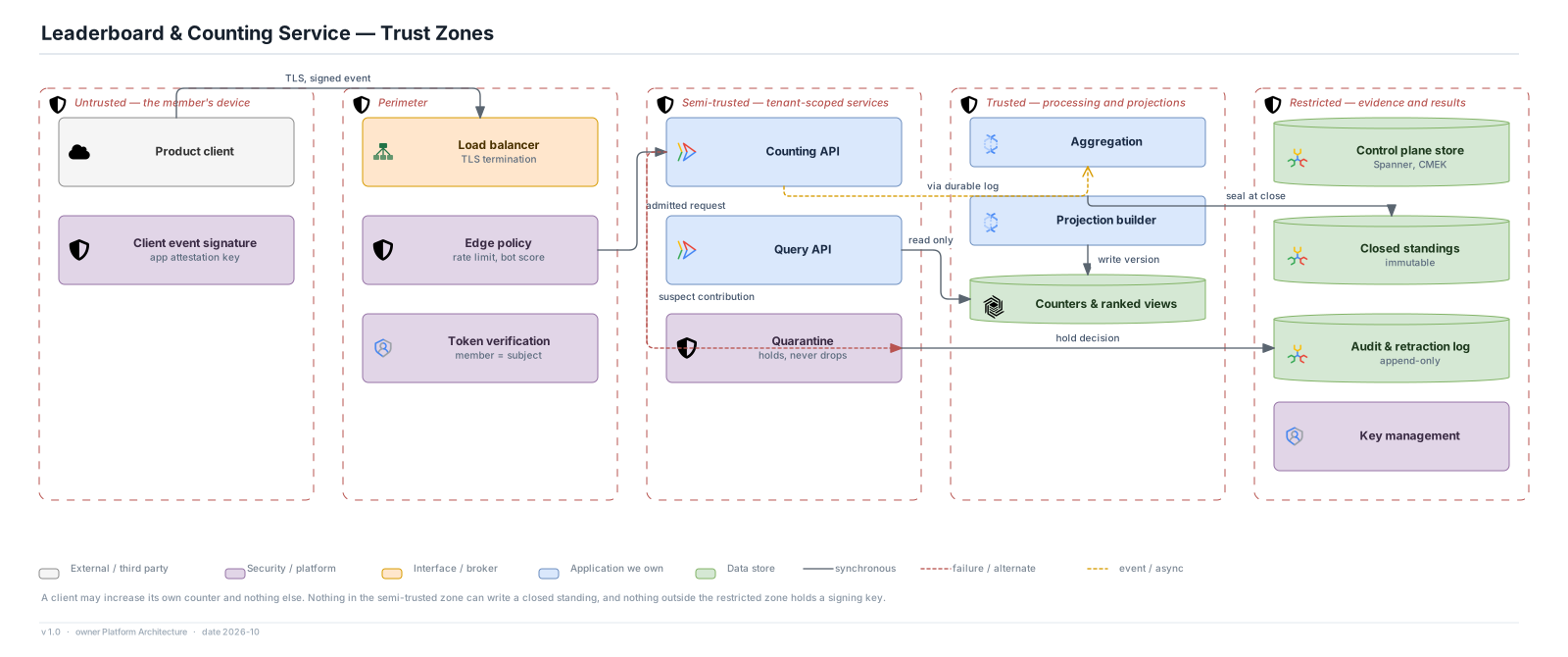
- A client may increase its own counter and nothing else. Every other write authority lives in a zone the device cannot reach.
- Nothing in the semi-trusted zone can write a closed standing. Sealing happens in the processing plane at season close, and the restricted zone is read-only to everything else.
- Quarantine sits in the semi-trusted zone deliberately: it must be reachable by the request path to hold a contribution, and its decisions are written to an append-only log in the restricted zone.
Controls
- Client events are signed with an app attestation key so a replayed or forged event is distinguishable from the product's own client.
- Customer-managed encryption on the control plane store; standings retained beyond the operational horizon keep per-tenant key boundaries.
- Leaderboards that expose activity level or location history are opt-in per tenant with member-level exclusion.
Risks
- App attestation raises the cost of forgery; it does not eliminate it. The inflation detector is the control that assumes attestation has been defeated.
- A compromised tenant service credential can write any counter that tenant owns, at any value within bounds. Bounds and rate limits are therefore a security control, not a hygiene one.