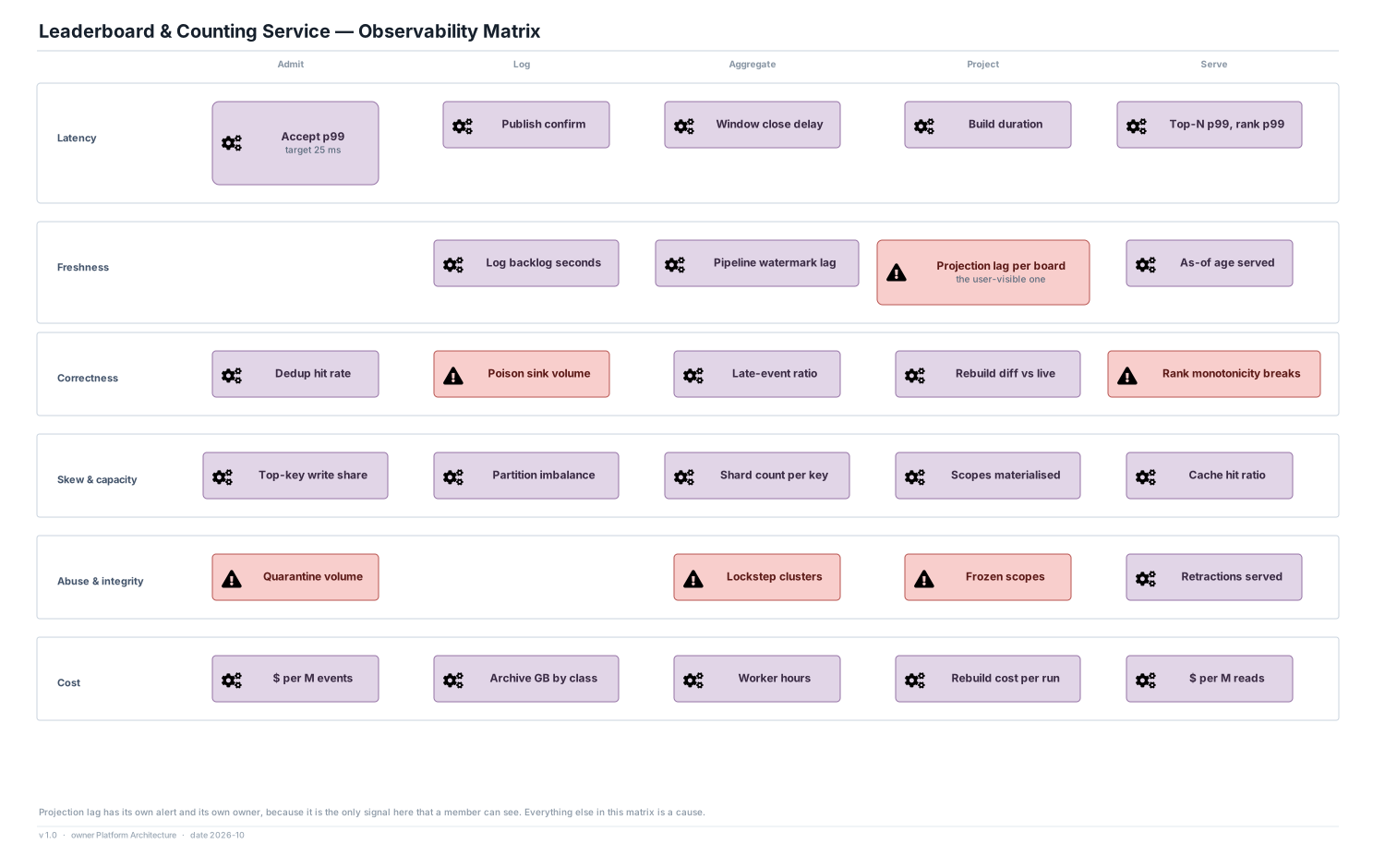
Projection lag per leaderboard has its own alert and its own owner, because it is the only row in this matrix a member can perceive. Everything else here is a cause.
Rebuild diff against live is a routine correctness signal, not an incident artefact: a scheduled rebuild that disagrees with the live projection is the earliest possible warning that an accumulator is not associative.
Rank monotonicity breaks are tracked as a correctness signal, because a rank that oscillates within a session is the failure members report and no latency metric shows.
What the matrix is for
Every column is a stage that can be the cause; every row is a way the platform can be wrong. A cell that stays empty is a statement that the stage cannot fail that way.
Cost sits in the matrix rather than in a monthly report, because the exact-versus-approximate decision is only honest if its price is visible continuously.
Risks
Six signal classes × five stages is a lot of alerting surface for a 9-person team. Only projection lag, quarantine volume and the infrastructure error rate should page.
Top-key write share is a leading indicator that only helps if the adaptive splitter acts on it faster than a launch can arrive.