Leaderboard & Counting Service · View 14 of 21 · Runtime
Decisions
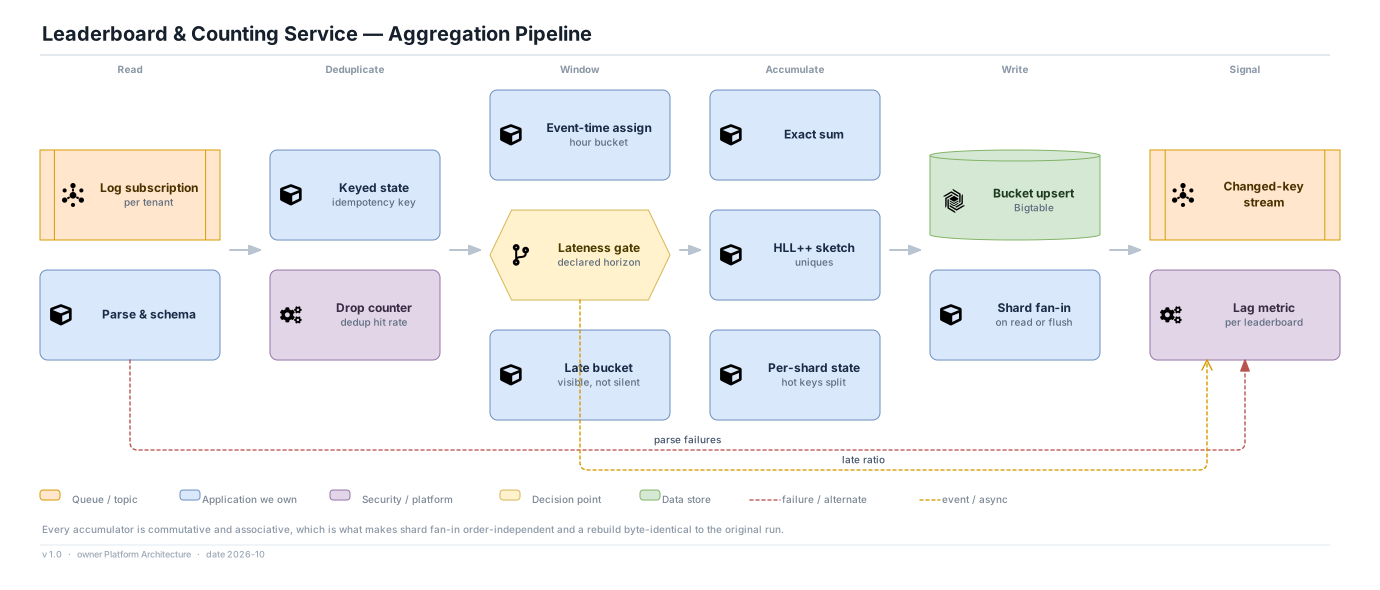
- Every accumulator is commutative and associative, which is what makes shard fan-in order-independent and a rebuild byte-identical to the original run. Any accumulator that is not loses the rebuild guarantee the whole architecture rests on.
- The lateness gate is an explicit decision point with a declared horizon per counter, and what falls beyond it goes to a visible late bucket. Silent inclusion and silent exclusion are both worse.
- The parse failure path and the late ratio are emitted as signals from inside the pipeline, because by the time they show up as a wrong number the cause is three stages back.
Why dedup lives here too
- Admission deduplicates client retries within the 24-hour horizon; the pipeline deduplicates redelivery from the log. They are different failures with the same remedy and the same key.
- Keeping dedup state keyed on the idempotency key means the pipeline's state size is bounded by the horizon, not by the counter count.
Risks
- Keyed dedup state at 250,000 events/second over a 24-hour horizon is the pipeline's largest state and its slowest restart.
- A sketch is mergeable but not retractable: removing a member from a unique-cardinality counter requires rebuilding the sketch for that window from the log.