Distributed Job Scheduler · View 13 of 20 · Runtime
Decisions
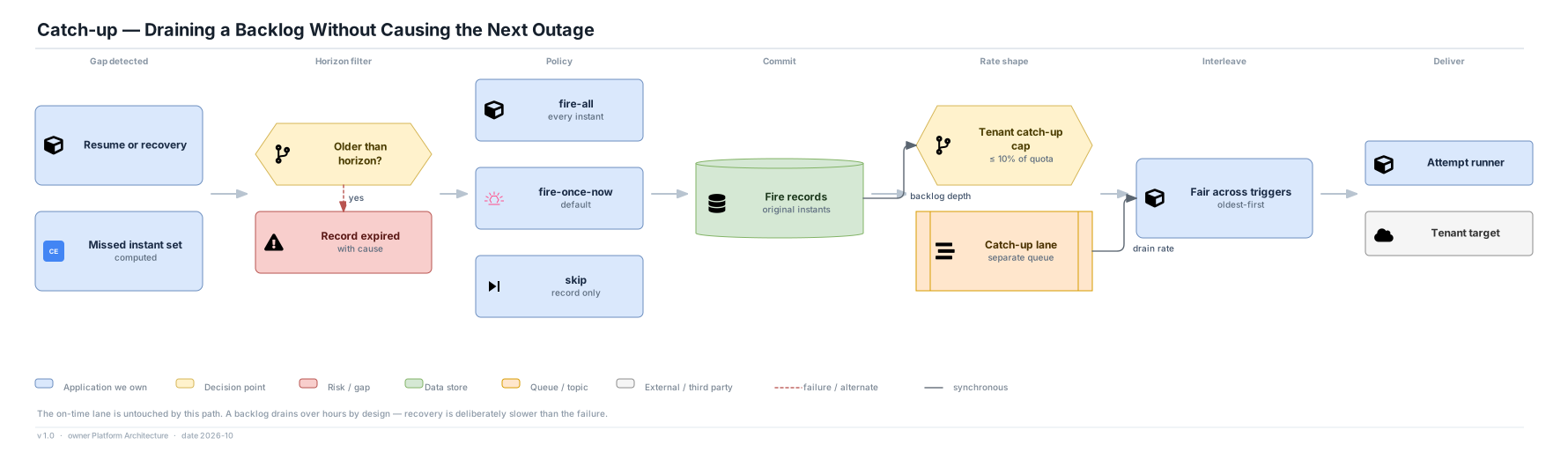
- The horizon filter runs before the policy, so an instant older than the horizon is expired whatever the tenant declared — the one place the platform overrules the tenant (ADR-08).
- Catch-up has its own lane and its own rate cap, so recovery is deliberately slower than the failure that caused it (ADR-09).
- Interleaving is fair across a tenant's triggers and oldest-first within one, so a single trigger's backlog cannot starve the rest.
Assumptions
- Catch-up horizon default 1 h, maximum 24 h. Catch-up dispatch capped at 10% of a tenant's steady-state quota — so a 1-hour backlog drains over roughly ten hours of added load rather than six minutes of saturation. All assumed.
- fire-once-now as the platform default, on the grounds that a duplicated billing run is worse than a skipped cache warm.
Risks
- A tenant who wanted fire-all and accepted the default loses work they expected. Mitigated by the cause on every expired instant and by backfill — not prevented.