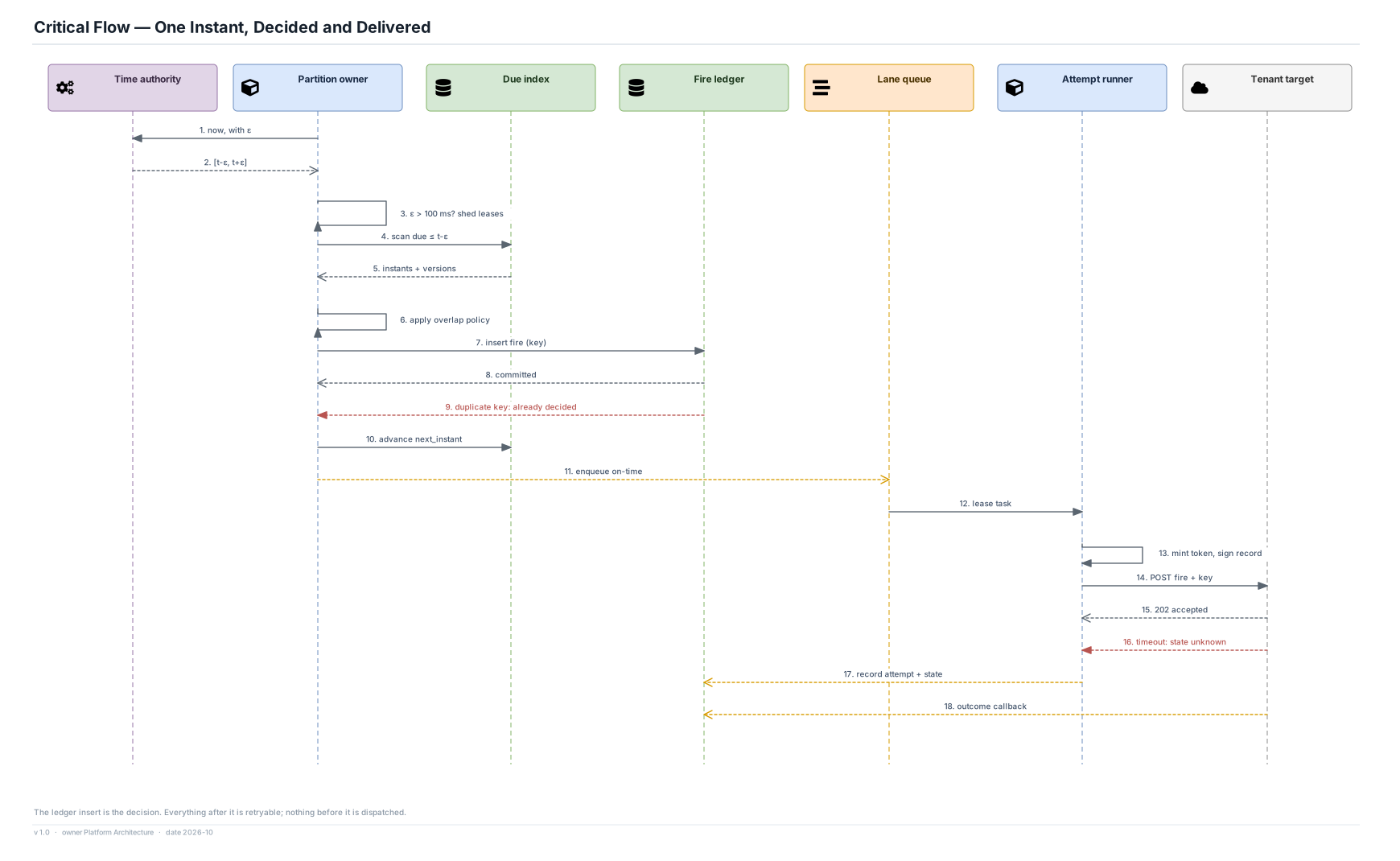
Distributed Job Scheduler · View 12 of 20 · Runtime
Decisions
- The owner asks the clock for an interval, not a timestamp, and scans for instants due at or before t−ε. It fires late by construction and never early (ADR-04).
- A duplicate-key rejection on the ledger insert is a normal, expected return — it is how two owners mid-handover agree without talking to each other (ADR-03).
- A dispatch timeout is recorded as unknown, not failed, because the target may have accepted it (ADR-12).
Assumptions
- ε ≤ 10 ms, with a node shedding leases above 100 ms. Paying 10 ms of deliberate lateness on every fire is cheap; at 500 ms it would not be, which is what makes Question 3 in the ask a question about the achievable bound.
- Residual duplicate dispatch ≤ 1 in 10^6 fires — assumed, and published as a contract rather than hidden behind an exactly-once claim.
Risks
- A lease is a promise about time held by a node that may not know the time. Short leases need a trustworthy clock, and the clock is the thing being guarded against — the circularity is real and is bounded, not removed.