Incident Management Platform · View 32 of 34 · 7 · Assurance
Decisions
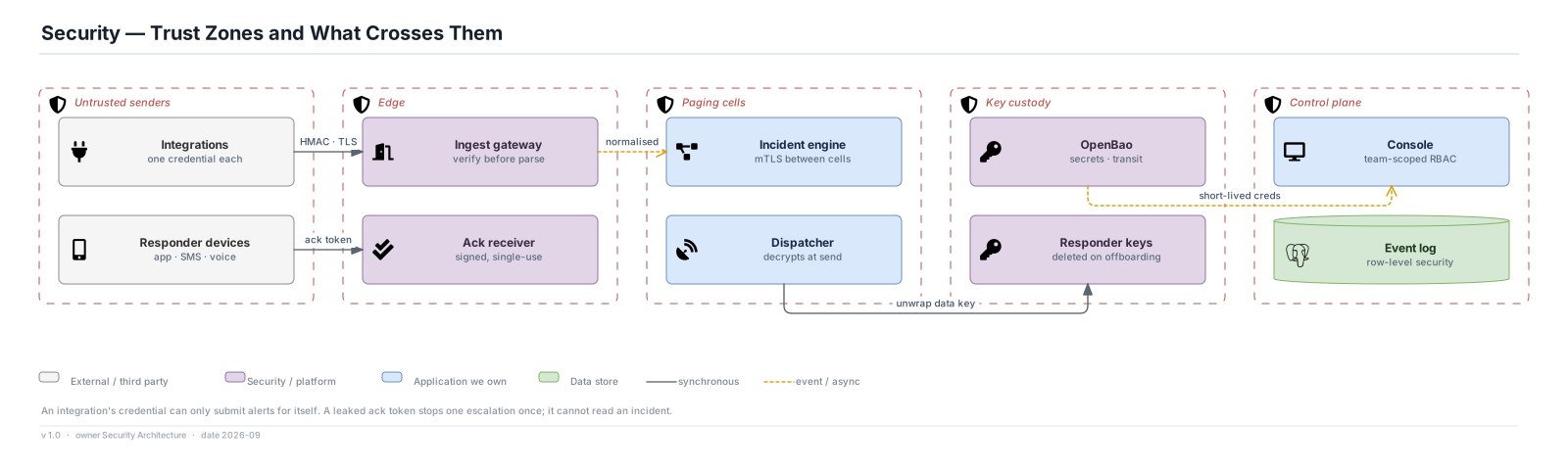
- Every integration is untrusted and has its own credential. Two secrets are valid per integration during rotation, both held in OpenBao, and revoking one integration never touches another or needs a deploy (ADR-27).
- Acknowledgement tokens are signed, bound to one incident, one responder and one step, and single-use. A forwarded SMS can stop one escalation once; it cannot read the incident or acknowledge anything else.
- Contact addresses are decrypted by the dispatcher at send time only, using a per-responder key unwrapped through OpenBao's transit engine. The event log and the console never hold them in clear.
Controls
- mTLS between cells and between cells and the control plane, from a platform-only PKI in OpenBao. Encryption at rest on every host and bucket. Sensitive incidents restricted by PostgreSQL row-level security to a named group, with the restriction itself an audited event (ADR-29).
Risks
- The responder app is the most exposed client. It holds no long-lived secret beyond a device key, receives only ack tokens and summaries in push payloads, and a lost device is revoked by removing its key.