Incident Management Platform · View 22 of 34 · 5 · Runtime
Decisions
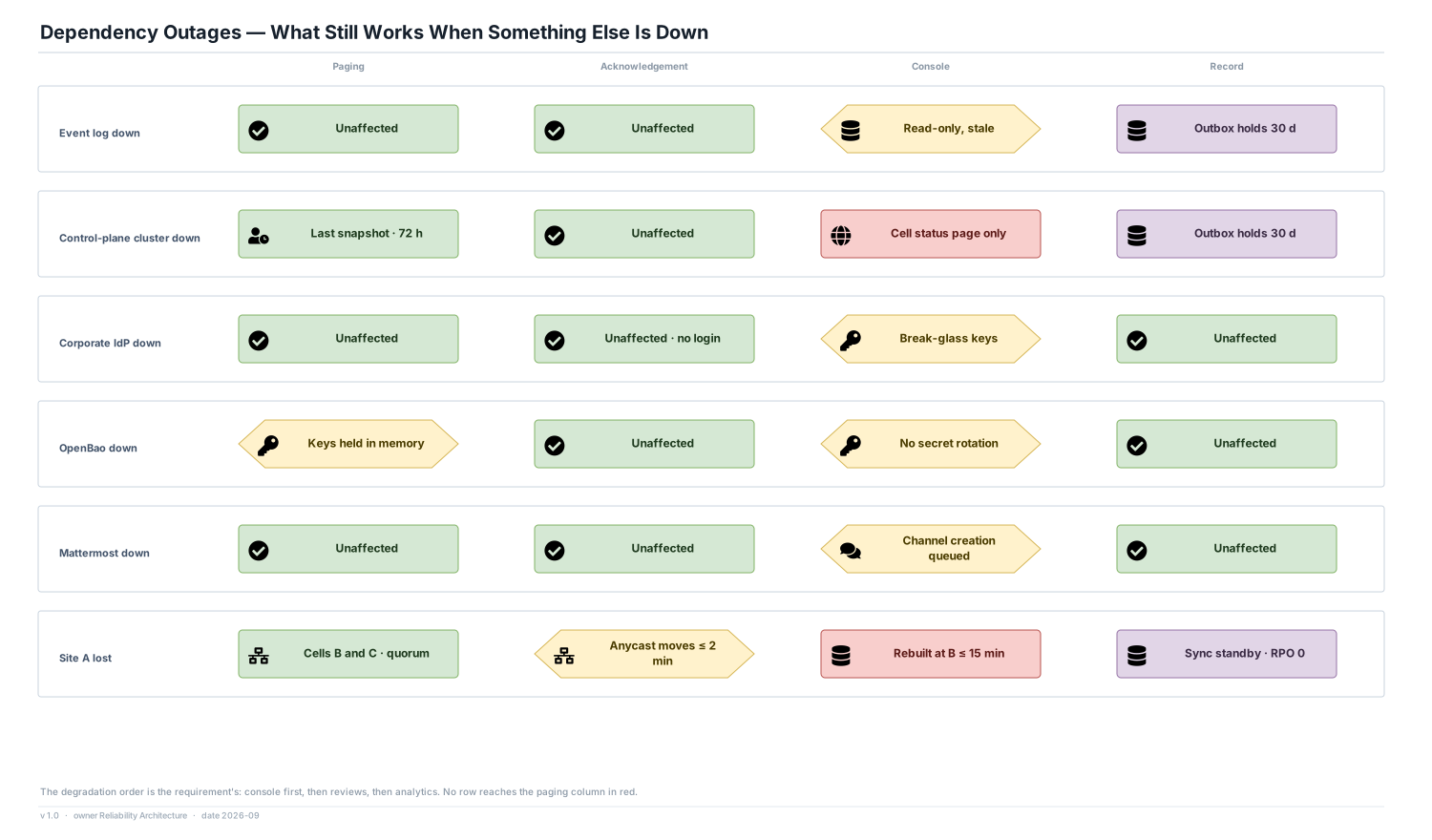
- When the control plane is down, each cell serves a read-only status page from its own state: open incidents, who was paged, who acknowledged. It is not the console. It is enough to run a response from.
- Keys the paging path needs, carrier credentials and the contact-data key, are fetched from OpenBao at start and held in memory. An OpenBao outage stops rotation, not paging.
- A degraded mode is announced. When a cell loses its connection to the control plane or the paging domain, the next page it sends says so in the incident summary, and the platform rotation is paged about it.
Degradation order
- Exactly the requirement's: console first, then the review module, then analytics staleness. The paging path is not in the order, because nothing it needs sits below it.
Risks
- A host restart during an OpenBao outage starts a dispatcher without keys. Hosts in the same cell restart one at a time and a starting dispatcher can request keys from a running peer over mTLS, so a single restart never leaves a cell blind.