Incident Management Platform · View 13 of 34 · 3 · Structure
Decisions
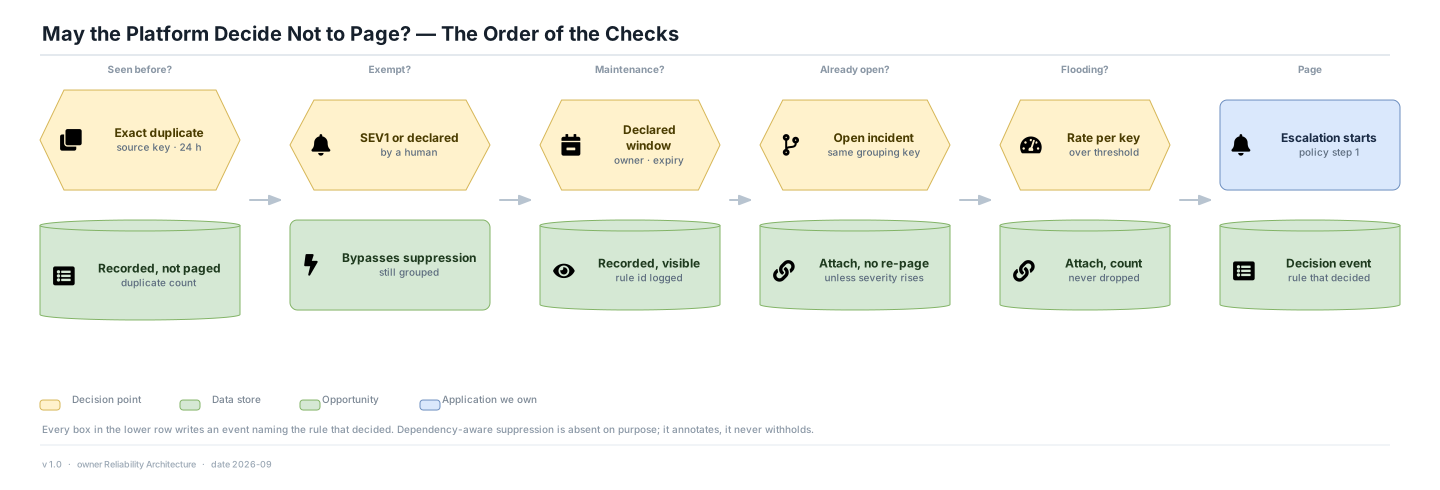
- Suppression is always declared by a human in advance, with an owner and an expiry of at most 30 days, and always recorded. The only automatic decisions not to page are exact duplicates and attachment to an incident that is already paging, and neither drops anything (ADR-12).
- The exemption check runs before any suppression rule. A SEV1, or an incident a human declared, is never suppressed by a maintenance window or flood control, whatever those rules say.
- Attachment to an open incident re-pages when the severity rises or a new service appears. Grouping is allowed to reduce noise; it is not allowed to hide a change in what is failing.
Why dependency suppression is absent
- Suppressing a downstream alert because an upstream dependency is failing is the single most effective noise reducer and the most reliable way to miss a second, unrelated failure. In this design dependency knowledge annotates an incident with a likely cause. It never withholds a page.
Target
- Every decision not to page names the rule that made it, so a review can answer 'did the platform choose not to page?' from the record in one query.