Incident Management Platform · View 12 of 34 · 3 · Structure
Decisions
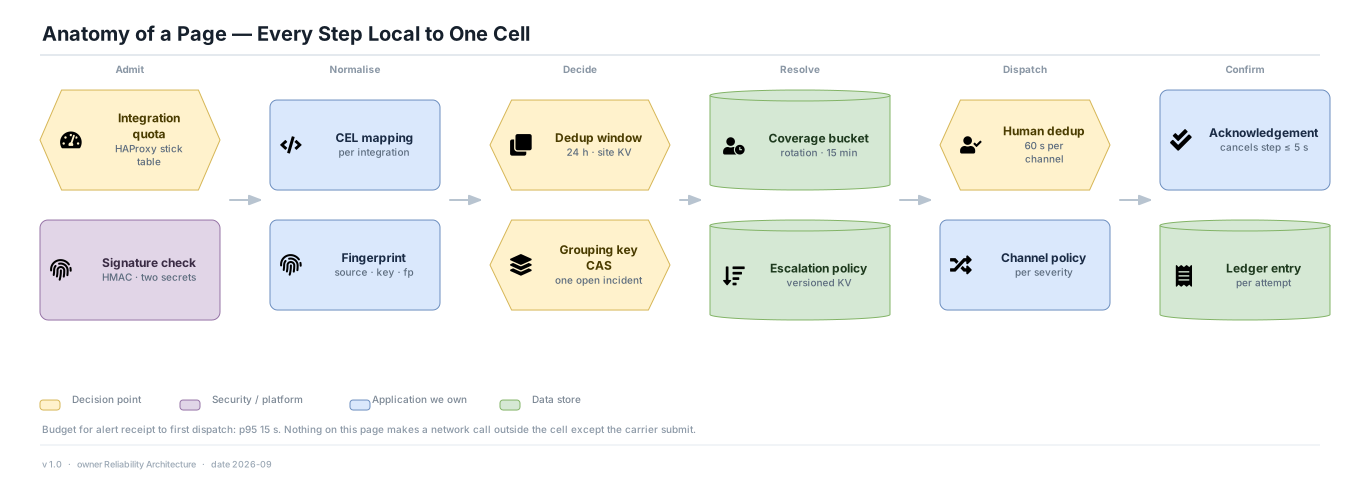
- Admission happens before parsing. A payload is counted against its integration's quota and its signature checked before a byte of it is interpreted, so a hostile or broken integration costs almost nothing to refuse.
- Grouping is a compare-and-set on the grouping key in the paging domain. Two cells receiving the same alert at once cannot both open an incident while the sites can talk; if they cannot, both page and the reconciler labels the duplicate (ADR-04).
- Deduplication happens twice, for different reasons: once on the alert, so a retried webhook is not a new signal, and once at the human, so a failover never produces the same SMS twice in 60 seconds.
Budget
- Admit, normalise and decide: under 200 ms at p99. Coverage and policy lookup: one key read each. The rest of the 15-second p95 belongs to the carrier and the phone.
Omitted
- The suppression checks inside Decide, which have their own page (view 13).