Incident Management Platform · View 03 of 34 · 2 · People and journeys
Actors — Who the Platform Is For and What They Get to Do
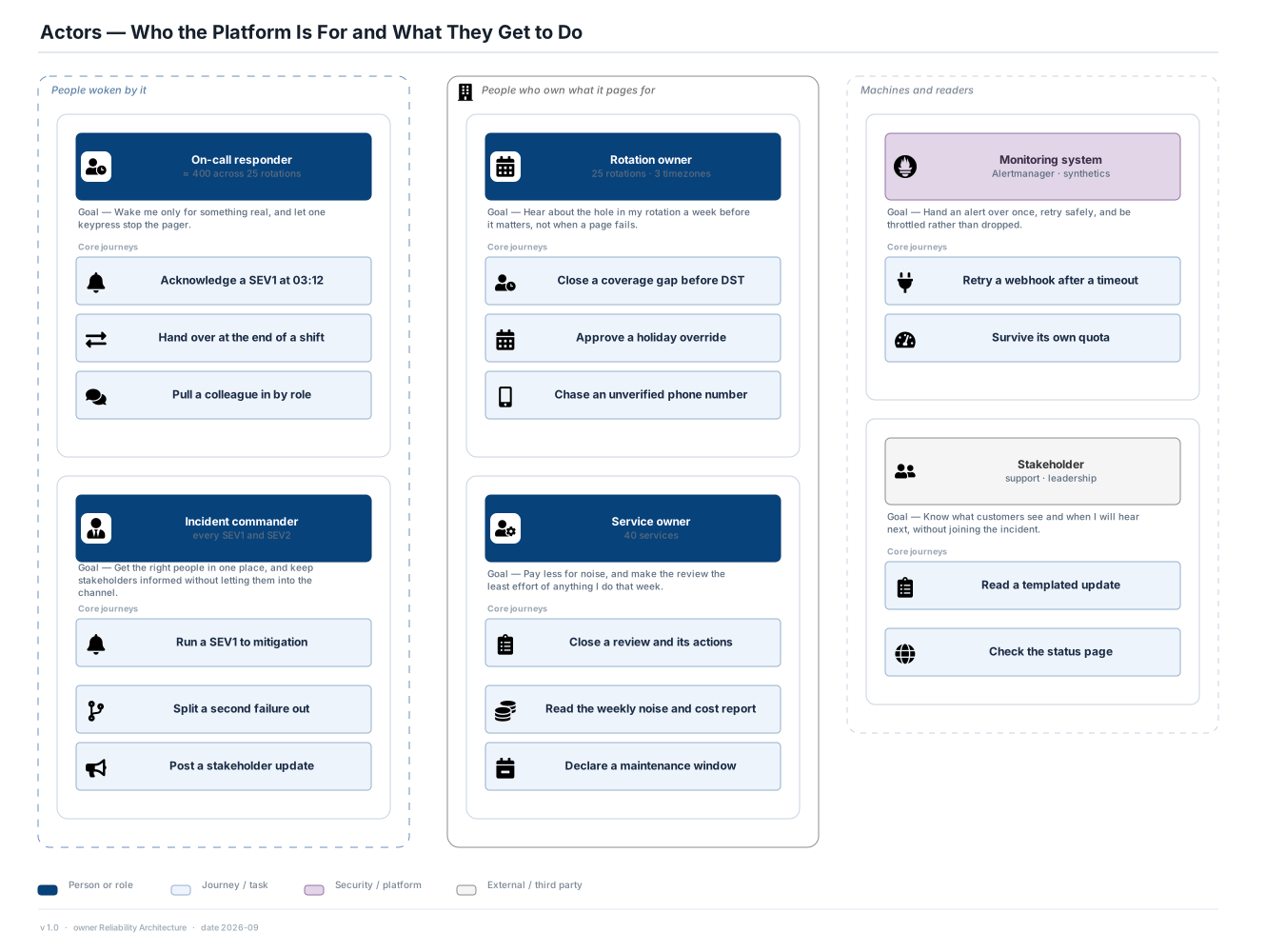
Six actors grouped by their relationship to the platform, each with the goal in their own words and the journeys that goal produces. Four of those journeys are mapped on the next pages.
The first group is woken by the platform, and it is the group whose trust decides whether the platform works at all. A responder who has learned to ignore the pager has turned the best escalation engine into a noise generator.
The second group owns what the platform pages for. Their journeys are slow and happen weeks before an incident: a coverage gap found early, a review that changes something. That is where most future pages are prevented.
Monitoring systems are actors because their behaviour under stress, retrying and flooding, is a design input. A webhook that retries on timeout is exactly the duplicate the ingest path must absorb.
Journeys mapped
View 04: a responder woken for a SEV1. View 05: an incident commander running it. View 06: a rotation owner closing a DST gap. View 07: a service owner turning a review into changed conditions.
Deliberately not an actor
Executives as incident participants. They are stakeholders who receive templated updates with a next-update-by time, which is what keeps them out of the responder channel.